Passer aux informations sur le produit


38%
remise


UGREEN Nexode Power Bank 12000mAh 100W
Prix promotionnel
42,99 €
Prix régulier
69,99 €
Économisez 38%
Avantages clés
Les avantages UGREEN


UGREEN Nexode Power Bank 12000mAh 100W


Remarque : cette batterie externe ne peut pas charger complètement un MacBook une fois.
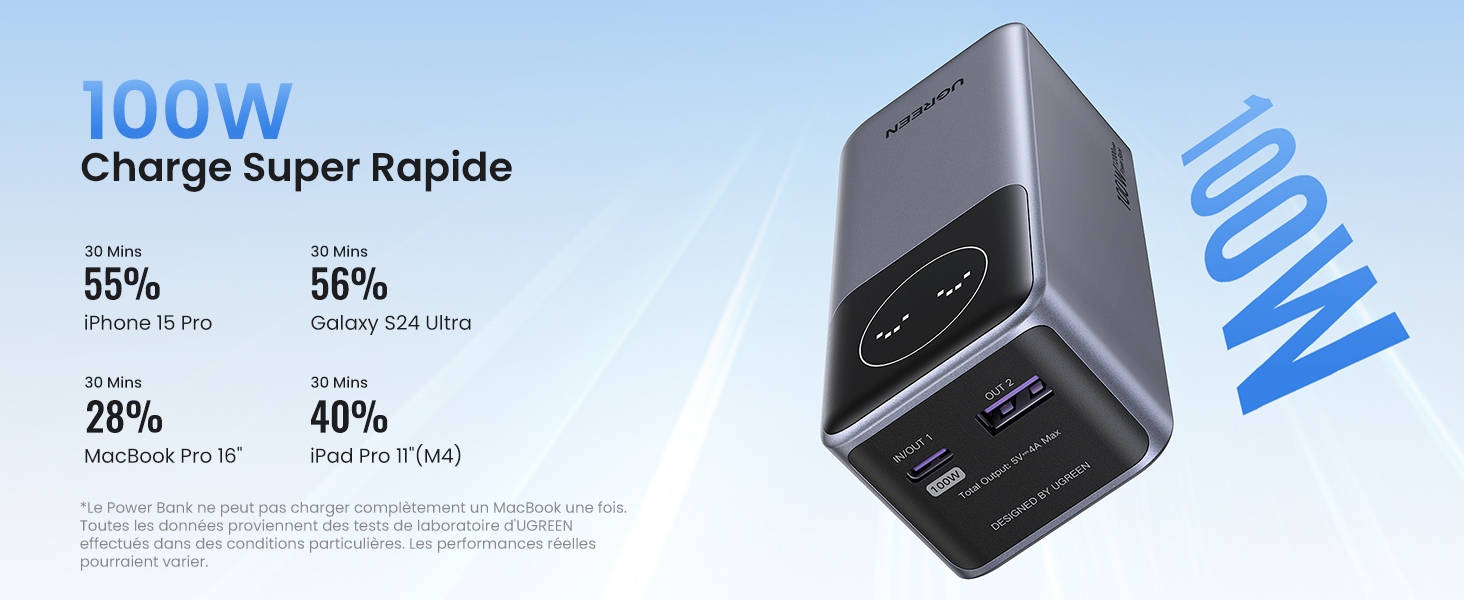
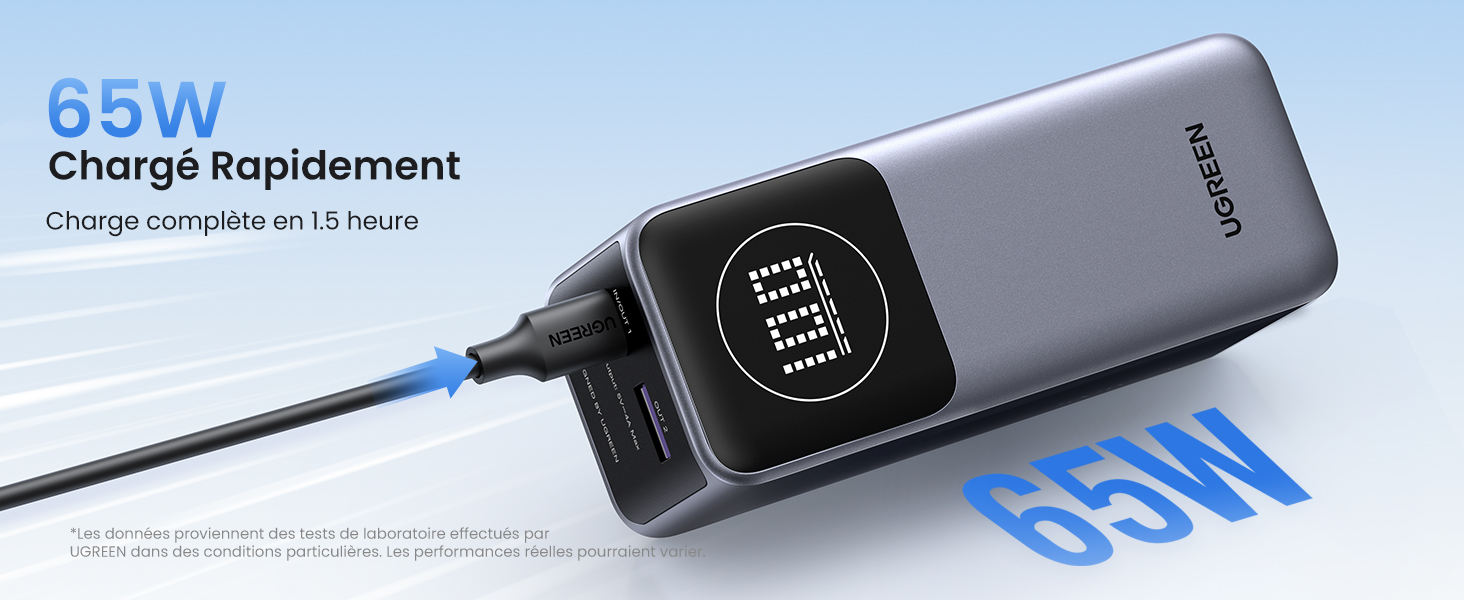


UGREEN propose une gamme exceptionnelle de batteries externes — offrant la solution idéale pour chaque situation.
Grâce à une technologie de pointe et une large variété de capacités, les batteries externes de UGREEN répondent parfaitement aux besoins de charge du quotidien — que ce soit à la maison, au bureau ou en déplacement.
En plus des modèles classiques à usage universel, la gamme comprend également des batteries externes magnétiques pratiques, idéales pour la recharge sans fil des iPhones.
Pour ceux qui recherchent une flexibilité maximale, UGREEN propose aussi une batterie externe rétractable avec câble intégré — parfaite lorsque vous n’avez pas de câble de charge supplémentaire à disposition.
Toutes les versions sont compactes, puissantes et conçues pour fournir une alimentation fiable pendant vos déplacements.
Specs
| SKU | 35526 |
| Capacitétotale | 12000mAh(44.4Wh) |
| Sortie | USB-C : 5V3A 9V3A 12V3A 15V/3A 20V/5A 100W Max PPS: 3.3-21V/5A USB-A: 5V3A 9V2A 12V1.5A 10V2.25A |
| Entrée | USB-C: 5V3A 9V3A 12V3A 15V/3A 20V/3.25A 65W Max |
| Ports | USB-A*1 USB-C*2 |
| Dimensions(mm) | (115*46*45.5)±0.3mm |
| Poids(g) | 310.6 |
| Afficher | LED |
| Chargementsansfil | N |
| Protocoledepriseencharge | Sortie:USB-C:PD3.0/PD2.0/BC1.2 Entrée:USB-C:PD3.0/PD2.0/PPS/QC3.0/QC2.0/FCP/AFC/APPLE 5V2.4A/BC1.2 USB-A: SCP/QC3.0/QC2.0/FCP/AFC/APPLE 5V2.4A/BC1.2 |
UGREEN Power bank, répond à tous vos besoins
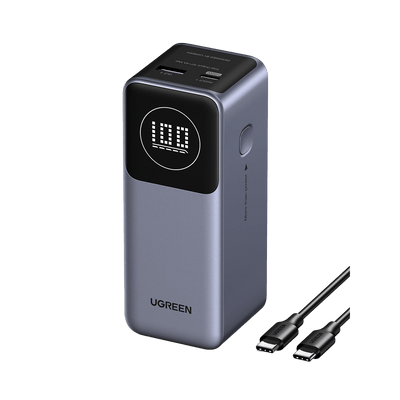
UGREEN Nexode Power Bank 12000mAh 100W
69,99 €
42,99 €

UGREEN Nexode Power Bank 20000mAh 130W
79,99 €
54,14 €

UGREEN Nexode Batterie externe 25000 mAh 145 W
82,17 €
49,99 €
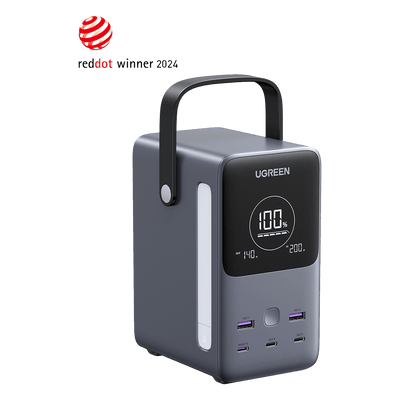
UGREEN 300W Batterie Externe Portable 48000mAh
299,99 €
179,99 €


UGREEN Nexode Batterie Externe Magnétique 10000mAh 20W
45,99 €
32,99 €
SKU
35526
35524
90597A
25286
25866
25919
Capacité
12000mAh
20000mAh
25000mAh
48000mAh
5000mAh
10000mAh
Puissance Max
100W
130W
140W
300W
15W
20W
Charge Magnétique
×
×
×
×
√
√
Pour MacBook Série
√
√
√
√
×
×
Pour iPhone 15 Série
√
√
√
√
√
√
Pour iPad Série
√
√
√
√
×
×
Dimension
4,5 * 4,6 * 11,5cm
5,4 * 5,1 * 13,1 cm
16 * 8,08 * 2,67 cm
-
10,58 * 6,87 * 1,31 cm
10,58 * 6,87 * 1,93 cm
Poids Net
309g
480g
513g
1.83kg
145g
220g
Product
SKU
Capacité
Puissance Max
Charge Magnétique
Pour MacBook Série
Pour iPhone 15 Série
Pour iPad Série
Dimension
Poids Net
UGREEN Nexode Power Bank 12000mAh 100W
69,99 €
42,99 €
35526
12000mAh
100W
×
√
√
√
4,5 * 4,6 * 11,5cm
309g
UGREEN Nexode Power Bank 20000mAh 130W
79,99 €
54,14 €
35524
20000mAh
130W
×
√
√
√
5,4 * 5,1 * 13,1 cm
480g
UGREEN Nexode Batterie externe 25000 mAh 145 W
82,17 €
49,99 €
90597A
25000mAh
140W
×
√
√
√
16 * 8,08 * 2,67 cm
513g
UGREEN 300W Batterie Externe Portable 48000mAh
299,99 €
179,99 €
25286
48000mAh
300W
×
√
√
√
-
1.83kg
25866
5000mAh
15W
√
×
√
×
10,58 * 6,87 * 1,31 cm
145g
UGREEN Nexode Batterie Externe Magnétique 10000mAh 20W
45,99 €
32,99 €
25919
10000mAh
20W
√
×
√
×
10,58 * 6,87 * 1,93 cm
220g
Reviews
J
The power bank's build quality and curved angle design are outstanding. With dimensions of 45.6 x 46 x 115 mm and a weight of 308.6 g it is smaller and lighter than any other power bank in its category. Its LCD display is flicker-free with large digits. The recessed side button is a nice touch. Also included a decent Ugreen USB-C to USB-C cable.
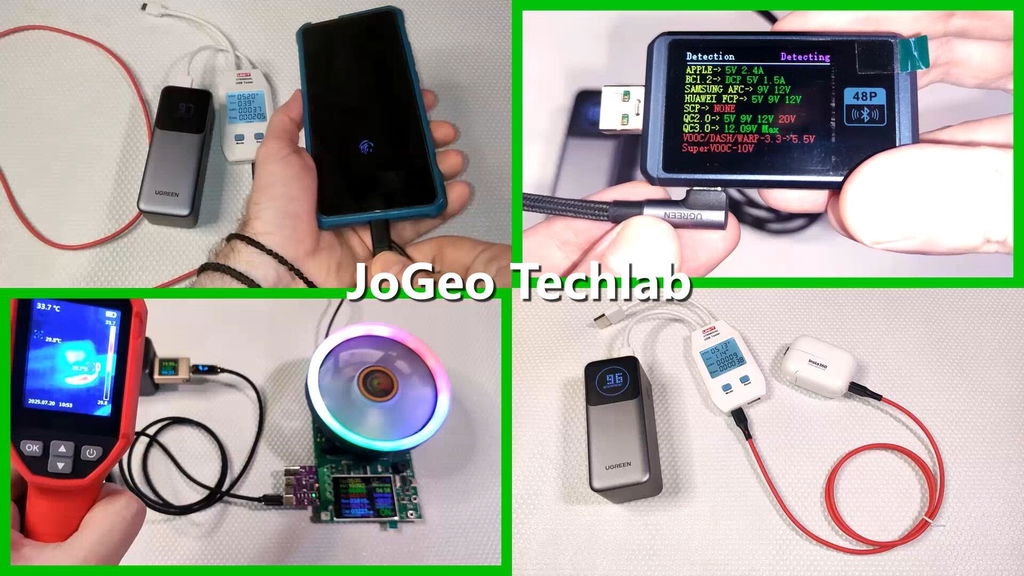
Under an input current load of 2.26A (max in 20V PD3.0) it consumes 50.9W. According to my protocols analysis both ports support the same protocols, with one exception: the Type-C has the additional PD3.0 20V/5A 100W (PPS) QC4. In PD3.0 I measured a max output of 5A 19.96V for the USB-C port and a max temperature of only 37°C. I also measured a total output current of 4.64A when both ports are used simultaneously (their voltages are limited to 5V and neither supports fast charging). My measurement for the power bank's actual capacity is 31.7Wh (6330 mAh at 5V) which is 93% of the rated value (34Wh).
My only complaint is that it doesn't work with pass-through charging. I tested the charger's compatibility with a number of different devices.The UGREEN Nexode PB724 power bank met and exceeded its specifications in almost all of the tests I ran with it while outputting and inputting up to 105W and 63.5W, respectively.
S
Se ha convertido en la batería que siempre llevo en la bolsa.
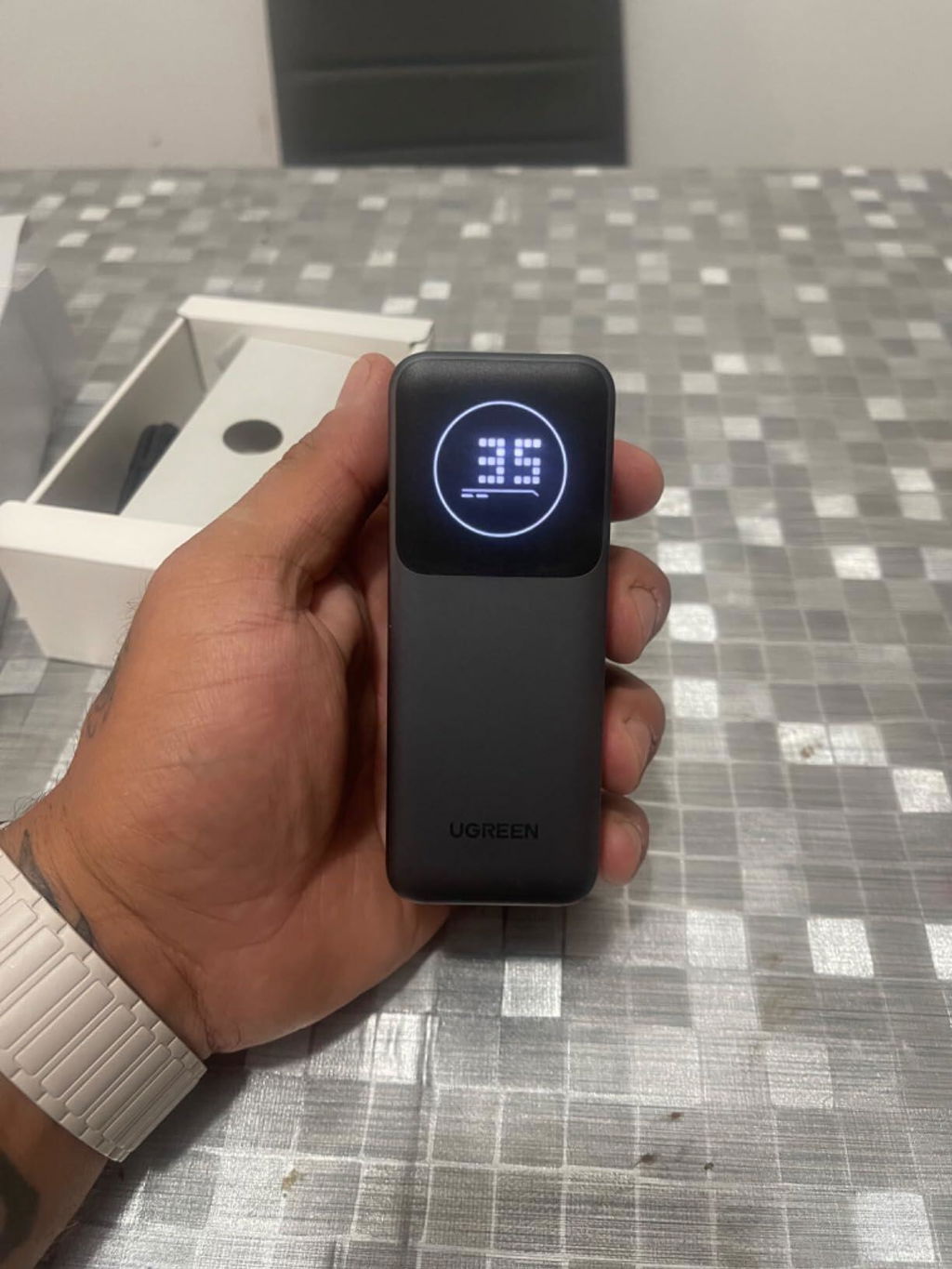
Lo primero que me llamó la atención del Nexode power bank fue su estética. Una pantalla digital agradable a la vista con números enormes y caritas monas y su forma que hace que sea más cómodo de llevar en la mano que otros bancos de energía.
Al ser de 12000 mAh, lógicamente pesa un poco más que los de 10000, pero sigue siendo lo suficientemente ligero para que apenas se note en la bolsa o mochila y al ser tan pequeño, cabe en cualquier rincón.
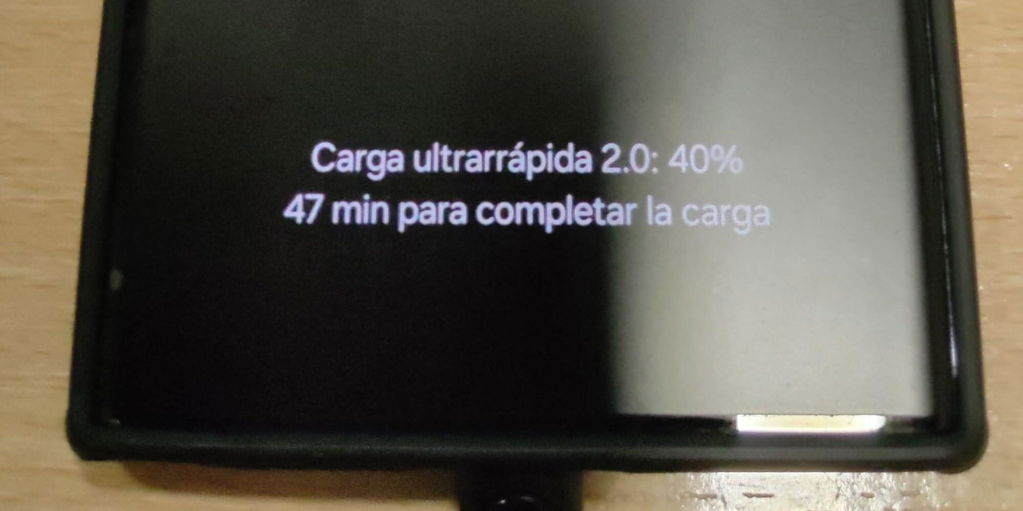
Pero lo realmente importante para mí ha sido la carga rápida que ofrece. Los dos cacharros con los que habitualmente voy a usar el Nexode son un galaxy s23 ultra y una Mi Pad 6.
Pues bien, con la Mi Pad 6, solo he conseguido carga rápida sin llegar a la carga turbo. Aunque esto seguramente sea por el tipo de cable de los Xiaomi.
Con el Samsung sin embargo me llevé una agradable sorpresa cuando vi en la pantalla "carga ultrarápida 2.0".
Al cargar la tablet (8840 mAh) desde el 15 hasta él 100%, me ha quedado todavía un 20% en el Nexode, lo que hace que más o menos pueda aprovechar en realidad unos 10000 de los 12000 mAh anunciados, pero eso ya me lo esperaba porque con los otros bancos de energía ocurre lo mismo. Simplemente me lo tomo como que por fin tengo uno de 10000 mAh reales. 😆
El precio puede parecer un poco elevado pero por la potencia que ofrece y la calidad de construcción, creo que merece la pena.
P
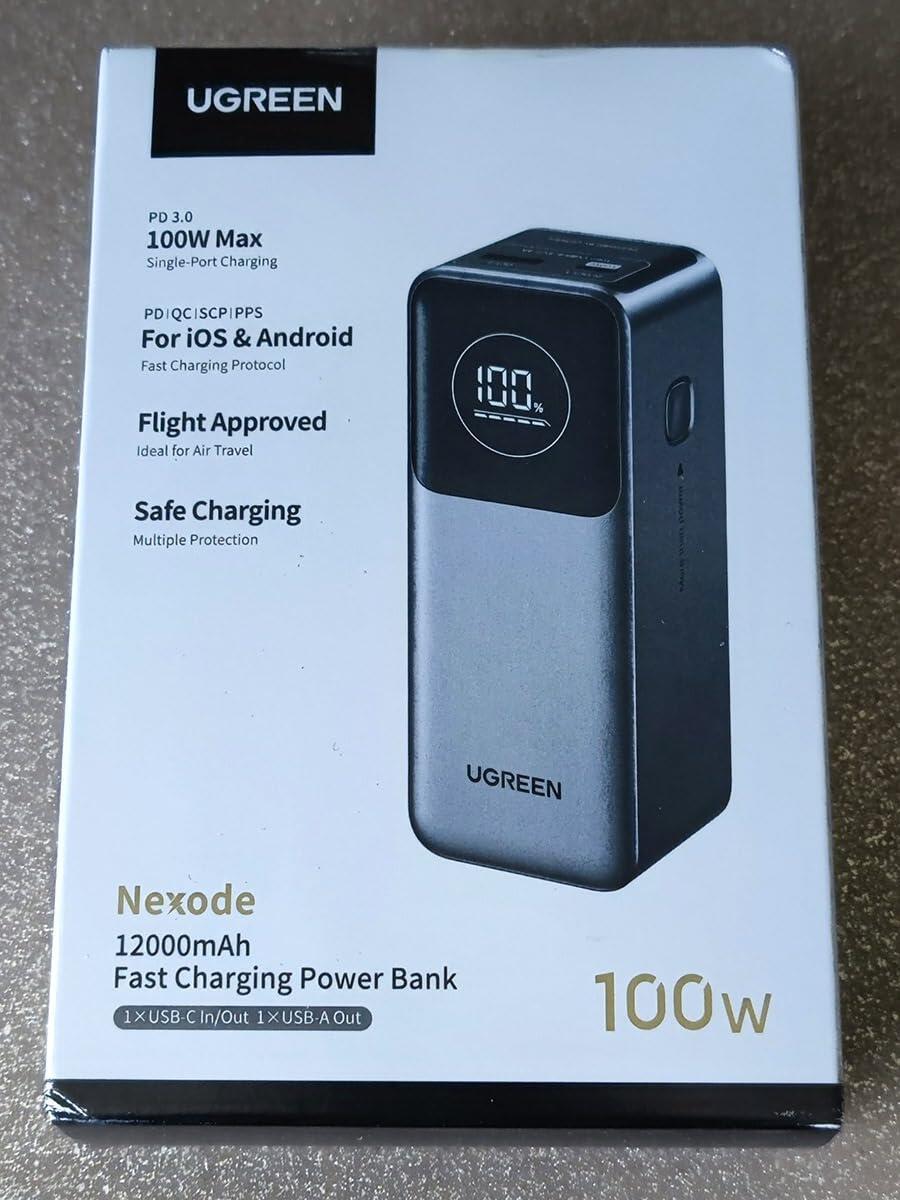
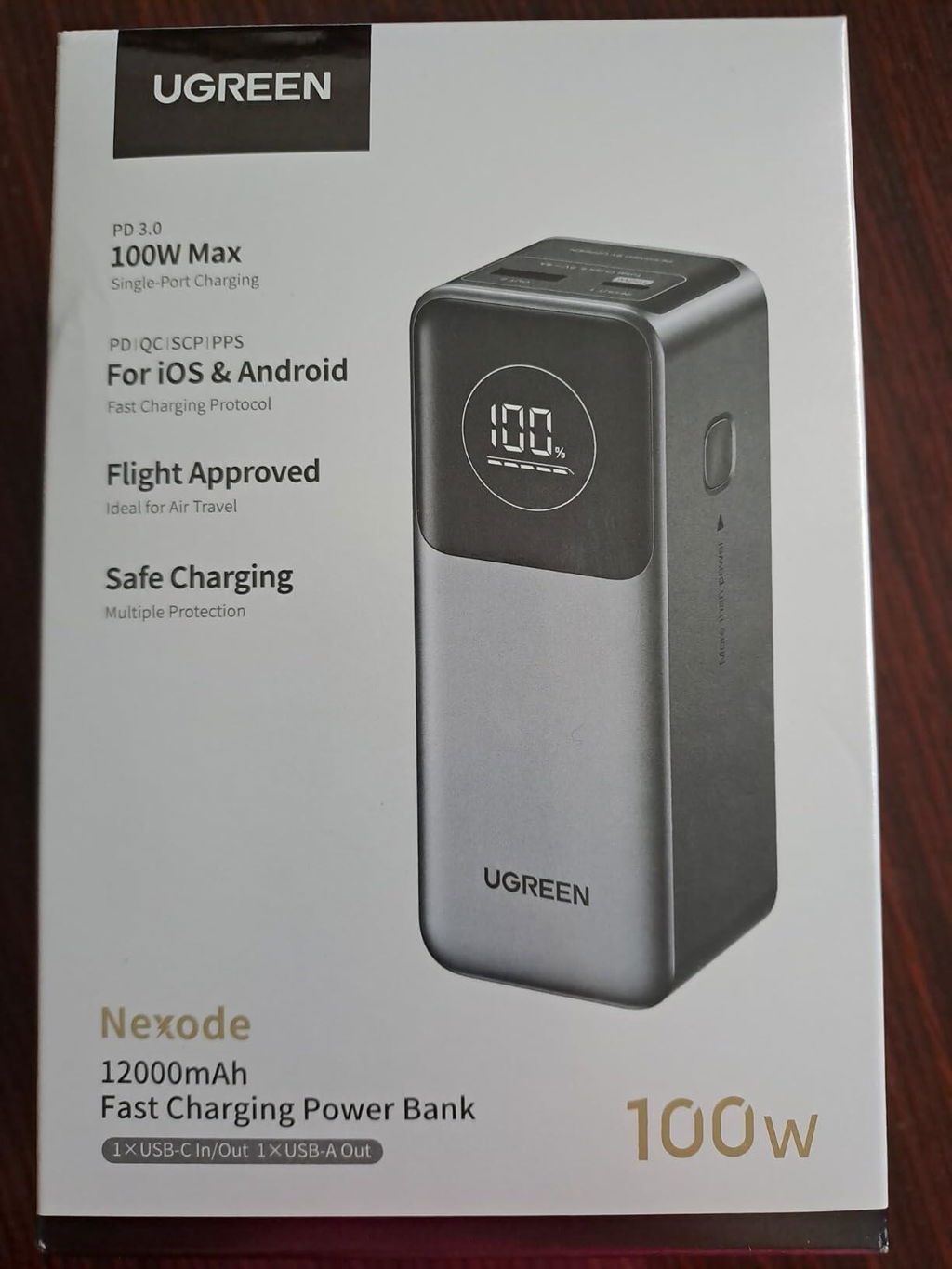
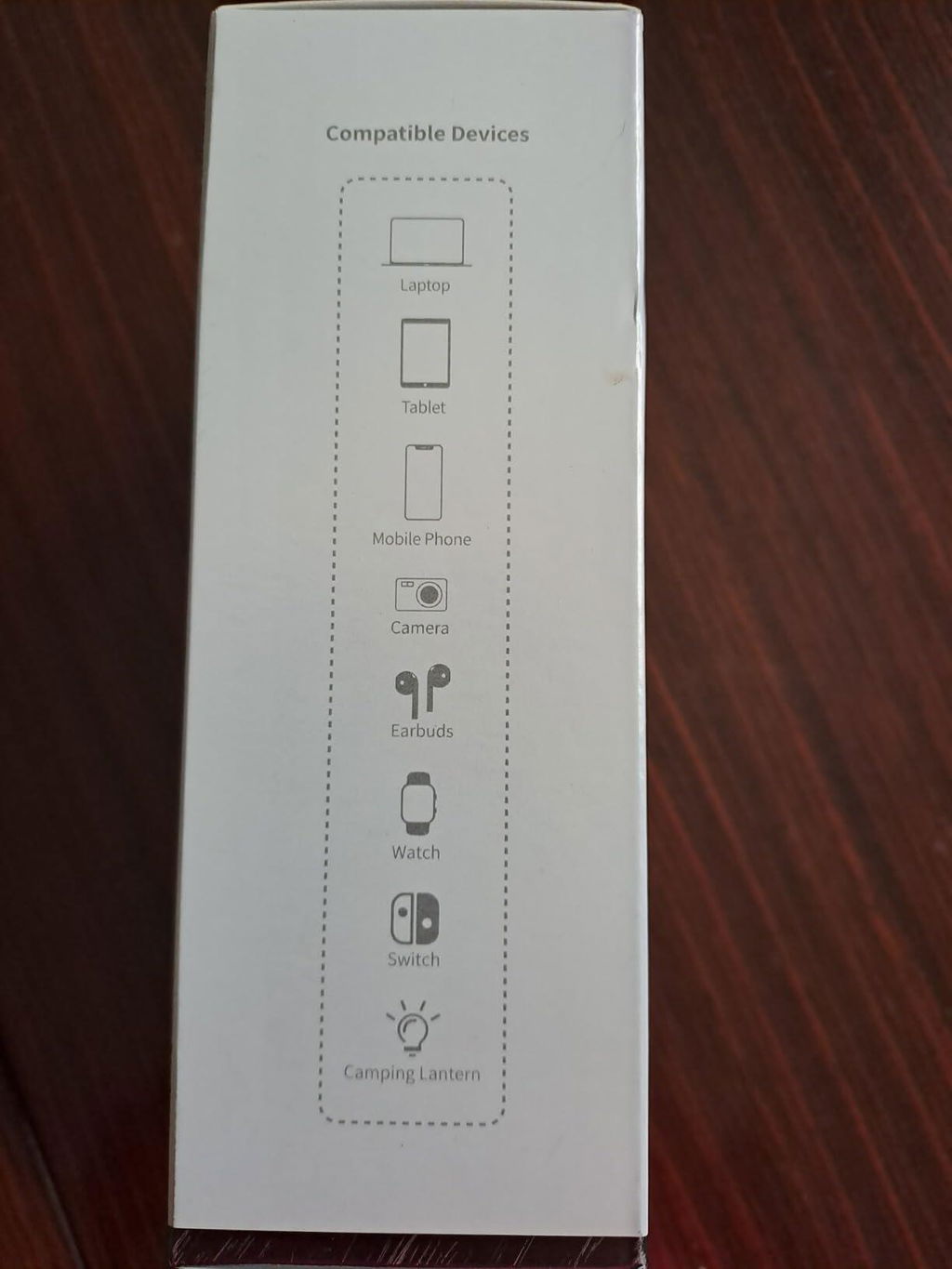
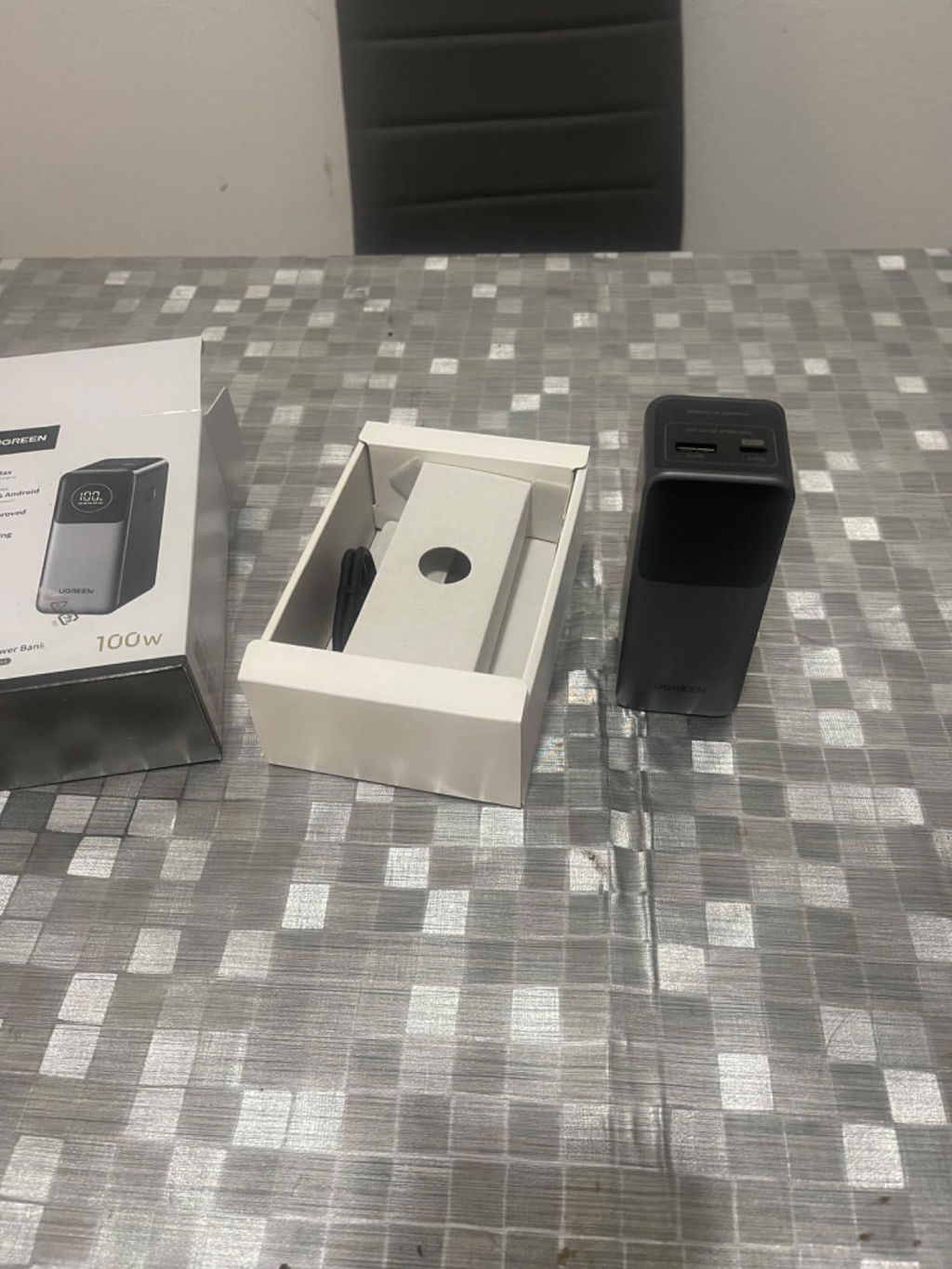
This Ugreen PB724 power bank arrives in a nicely branded retail pack, detailing the devices key features and specifications.
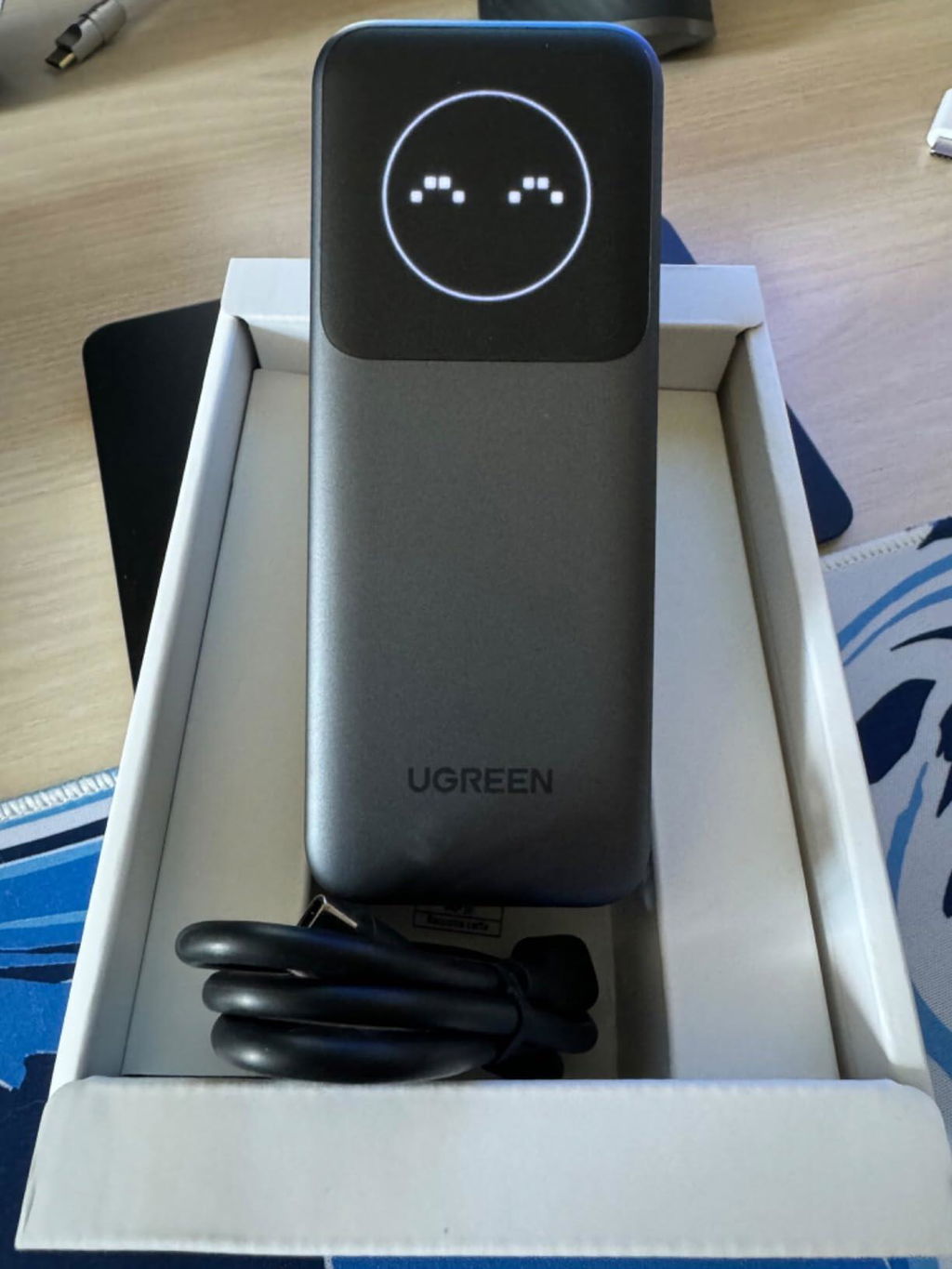
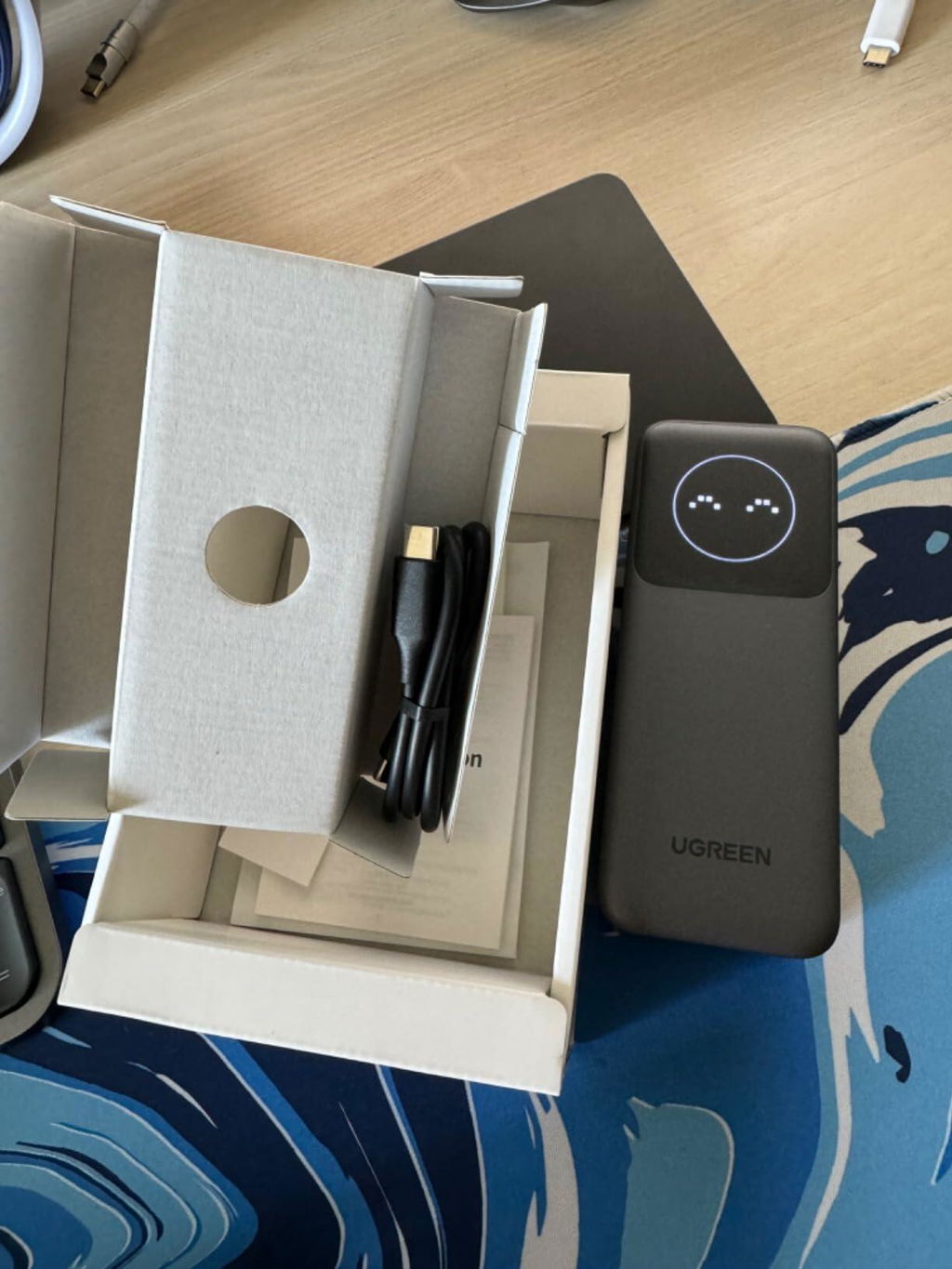
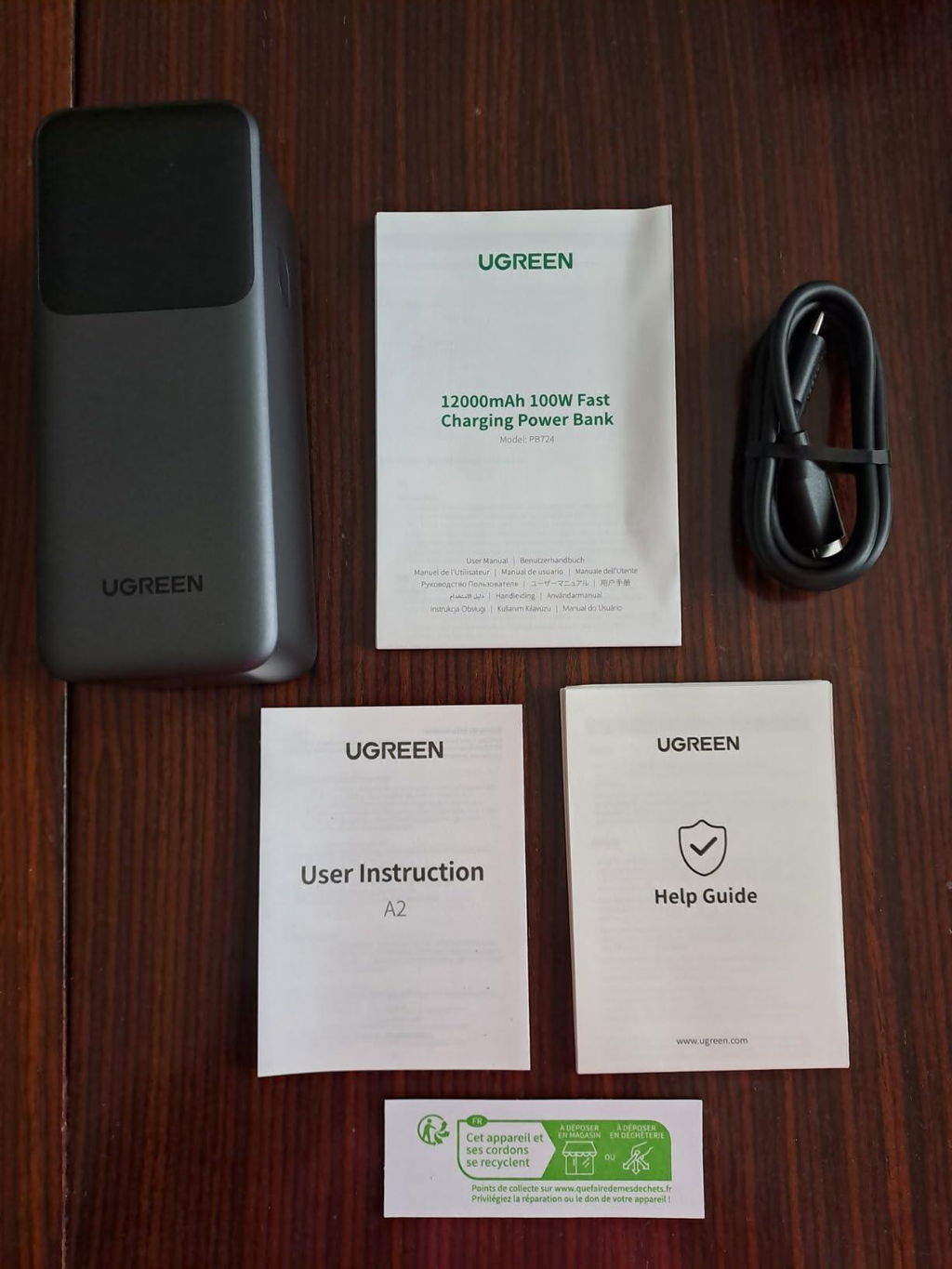
Inside, we find the power bank itself along with a USB-C power cable and assorted documentation. This consists of a User Instruction booklet, a Help Guide and an Operation Manual, all produced in many different languages. The latter is the only useful one, although its use is somewhat diminished by the strange way the information in various languages is laid out across a large sheet.
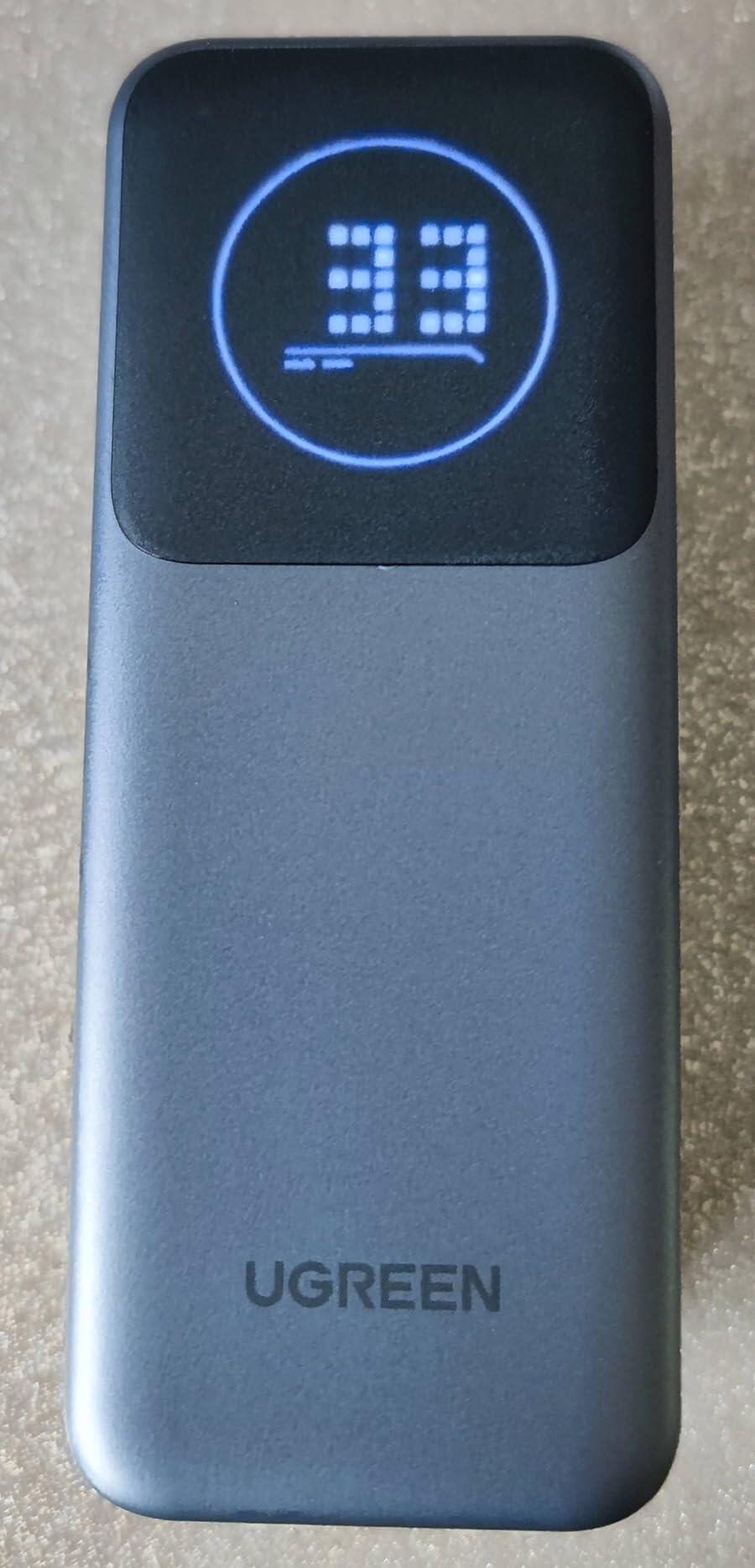
As we've come to expect from Ugreen products, the power bank is very nicely finished, with an attractive charcoal grey plastic case featuring a black display window.
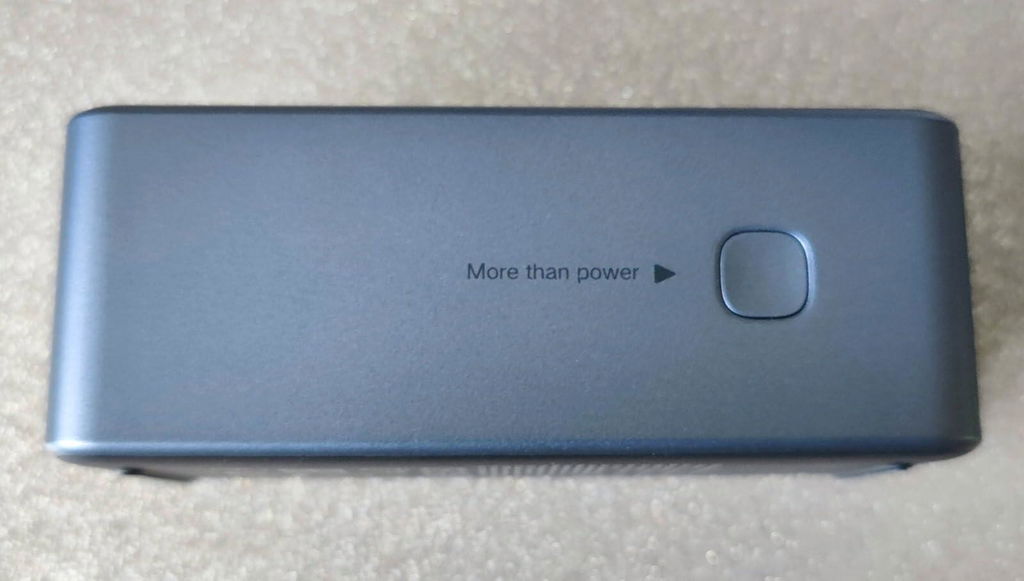
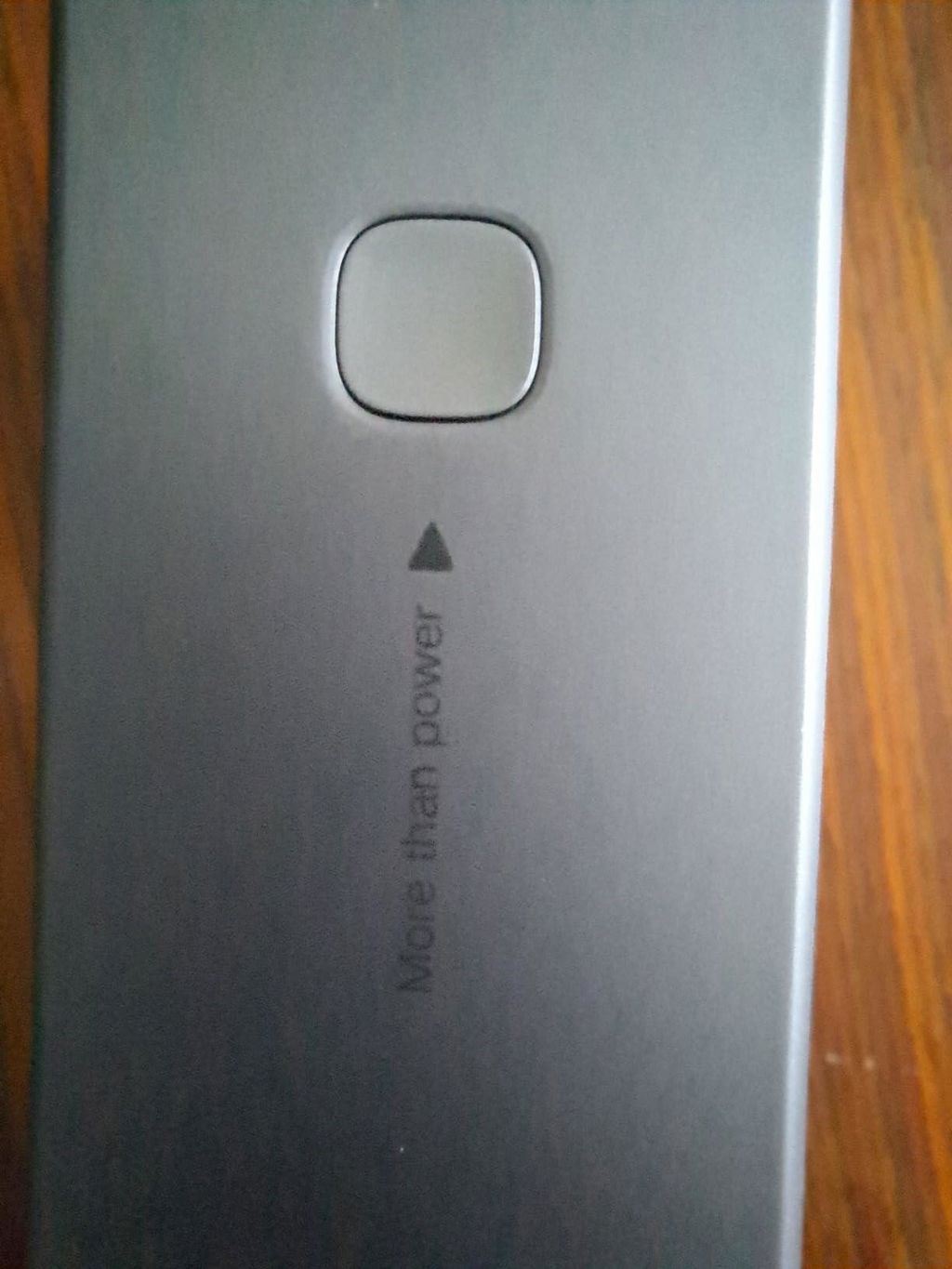
The base includes two silicone strips to prevent slippage and allow a modicum of airflow. On the side is a push button which, the label assures us, controls "More than power".
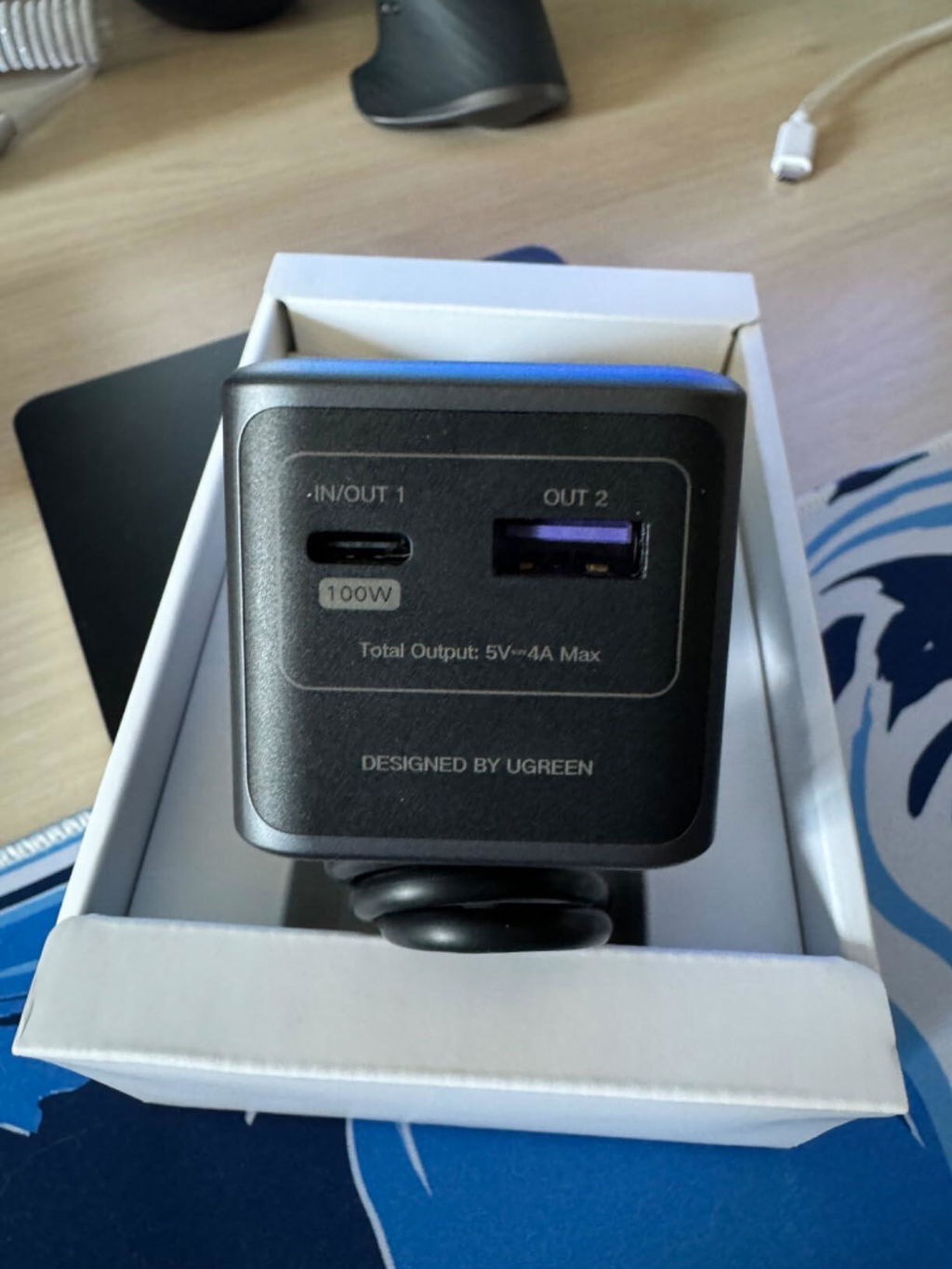
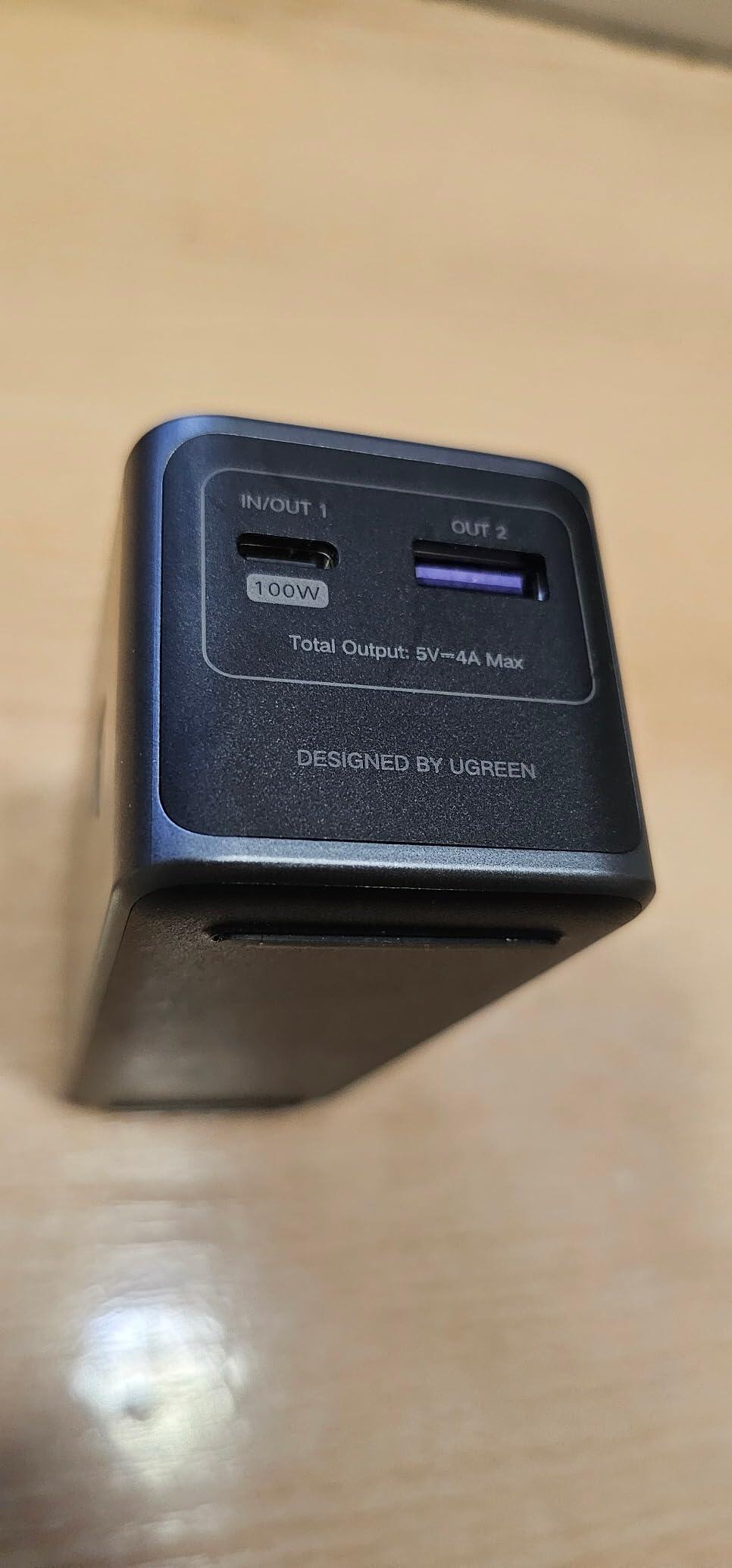
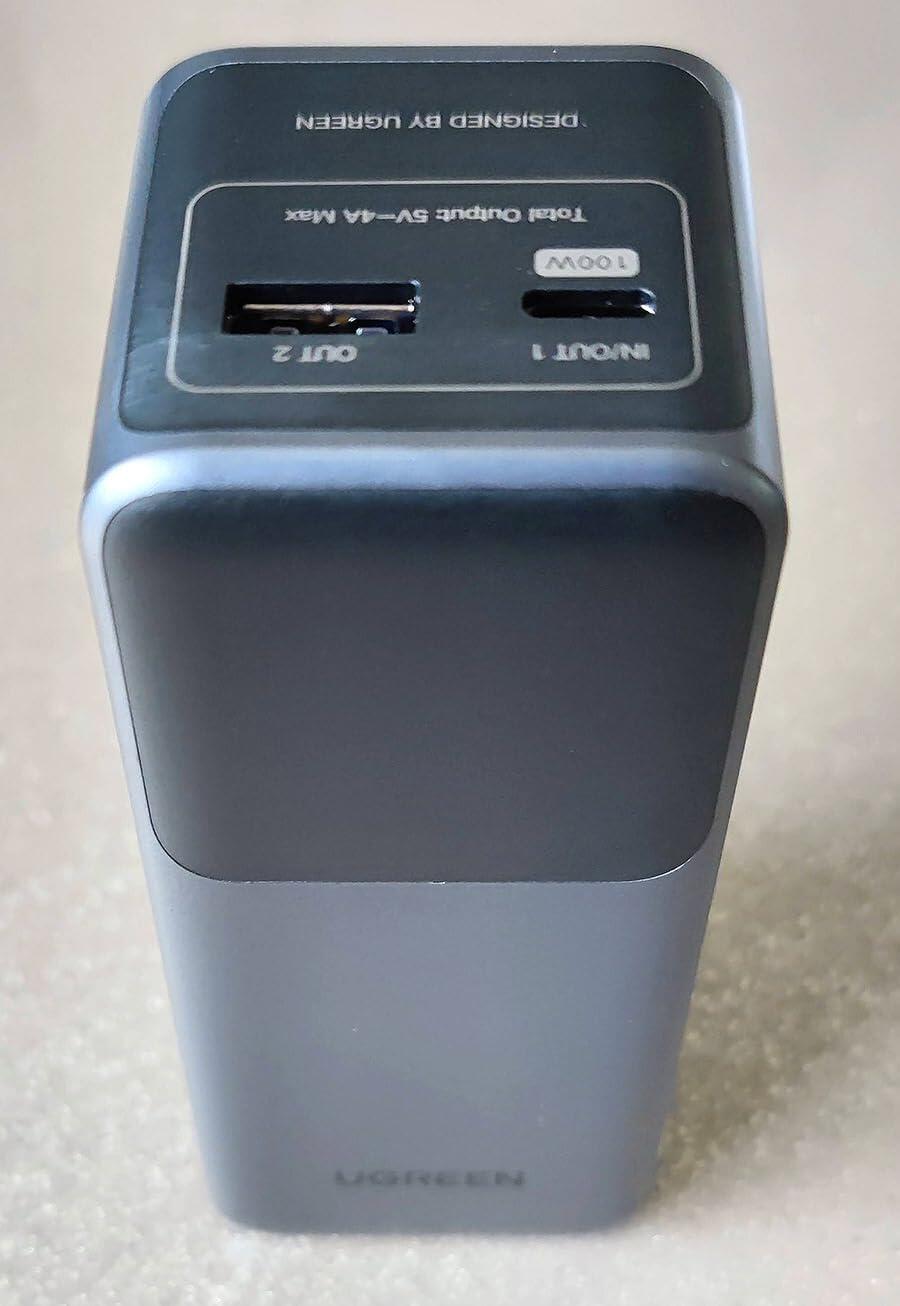
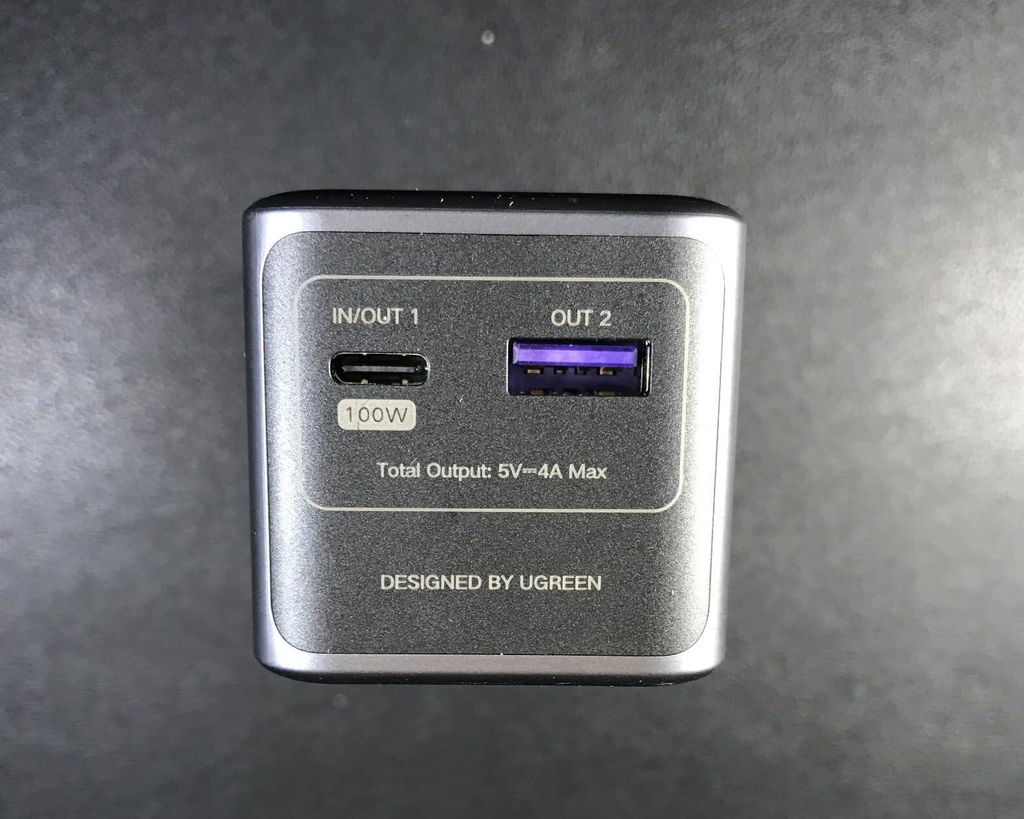
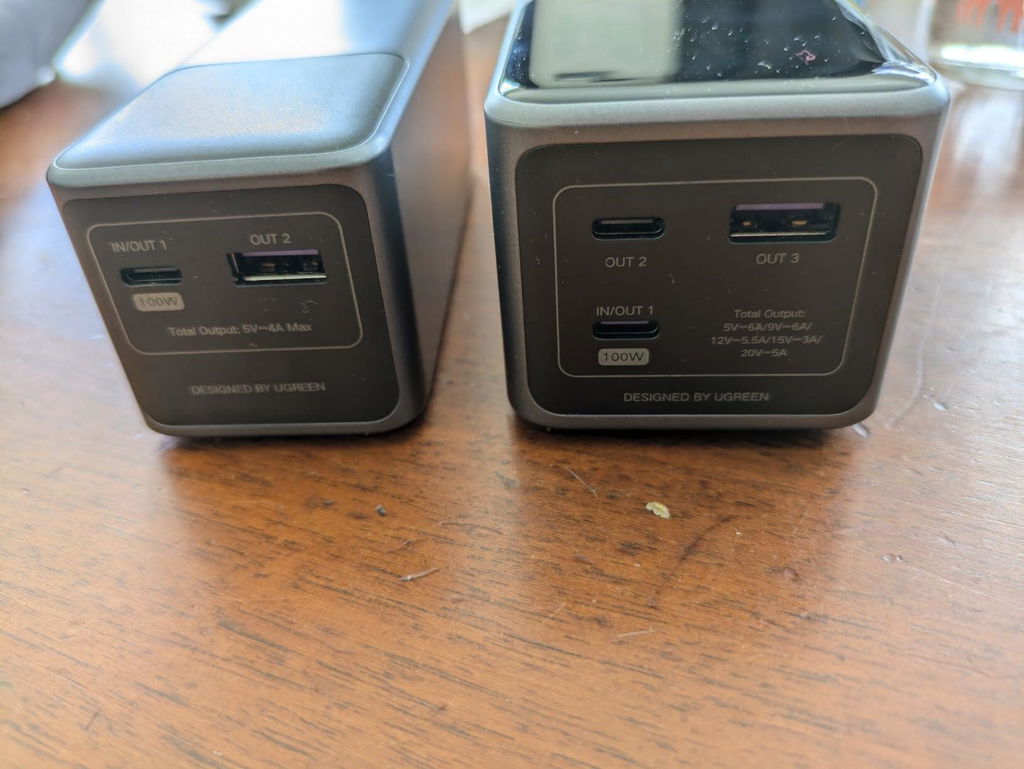
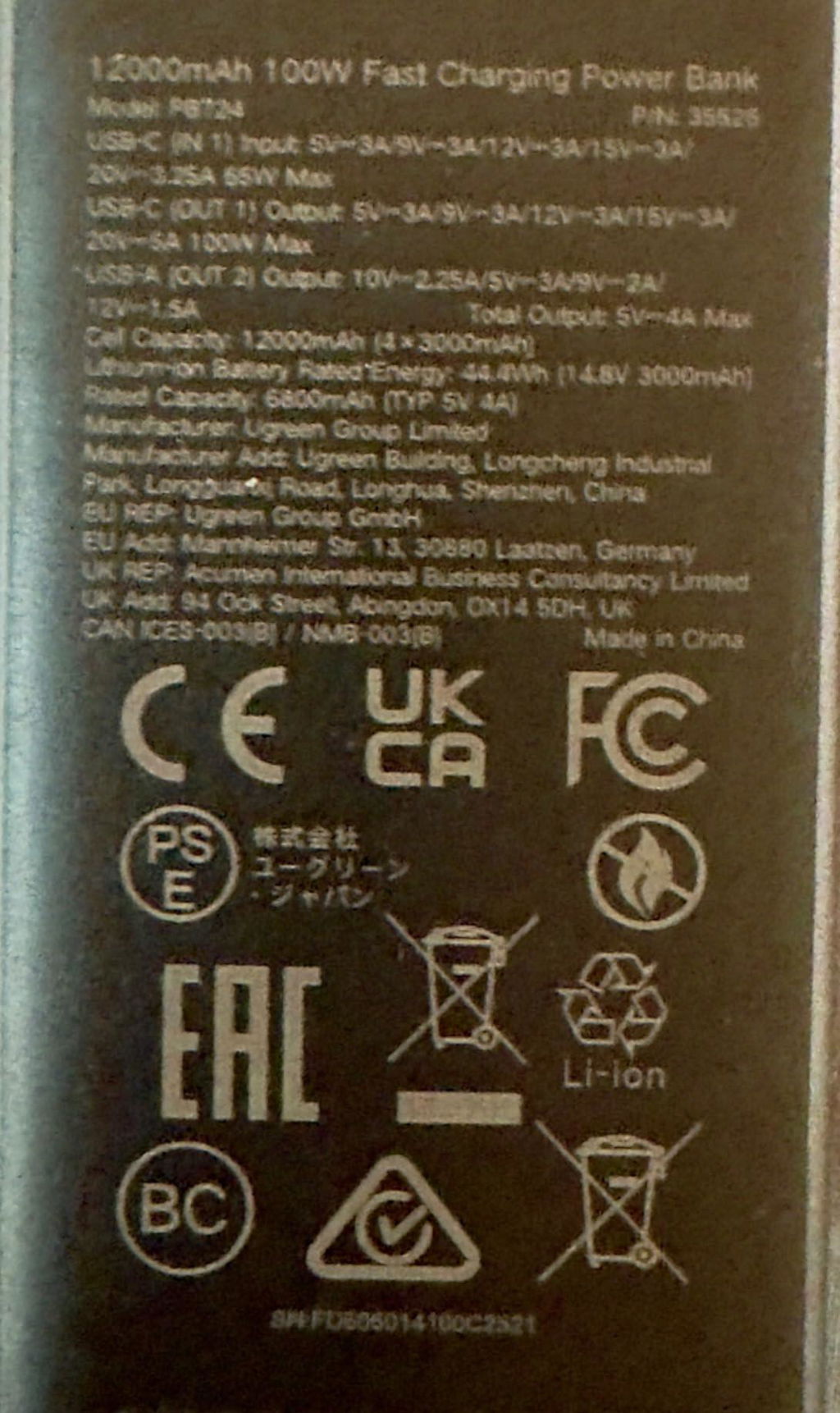
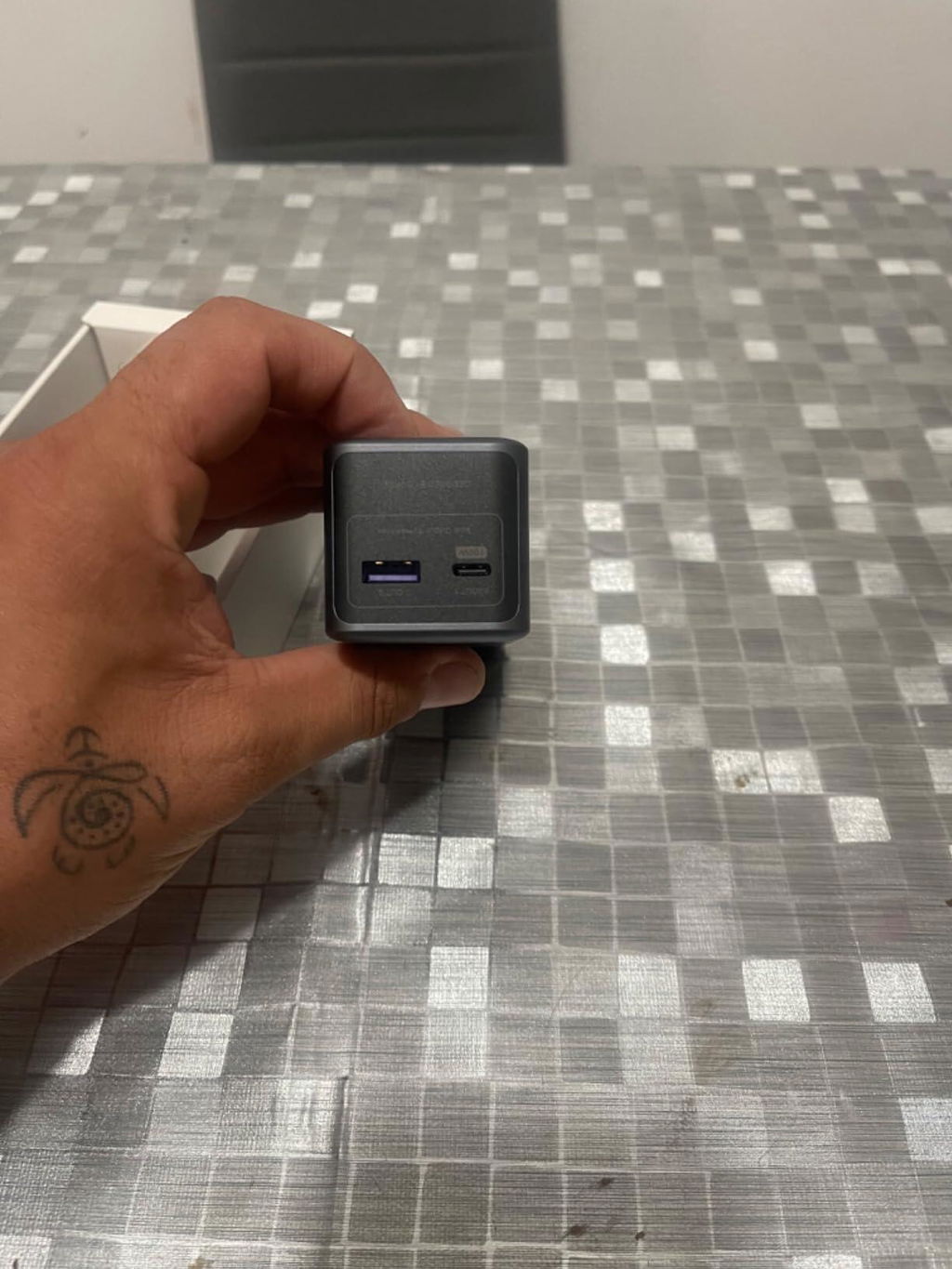
It's a fairly chunky and weighty package, so it's slightly surprising to find it only offers two USB power ports - one USB-C and one Type-A - with a note saying the maximum total output at 5V is 4A (or 20W) which seems surprisingly little. However, this isn't entirely as poor as it seems as both ports are capable of supplying higher voltages (if your device supports them) at decent currents.
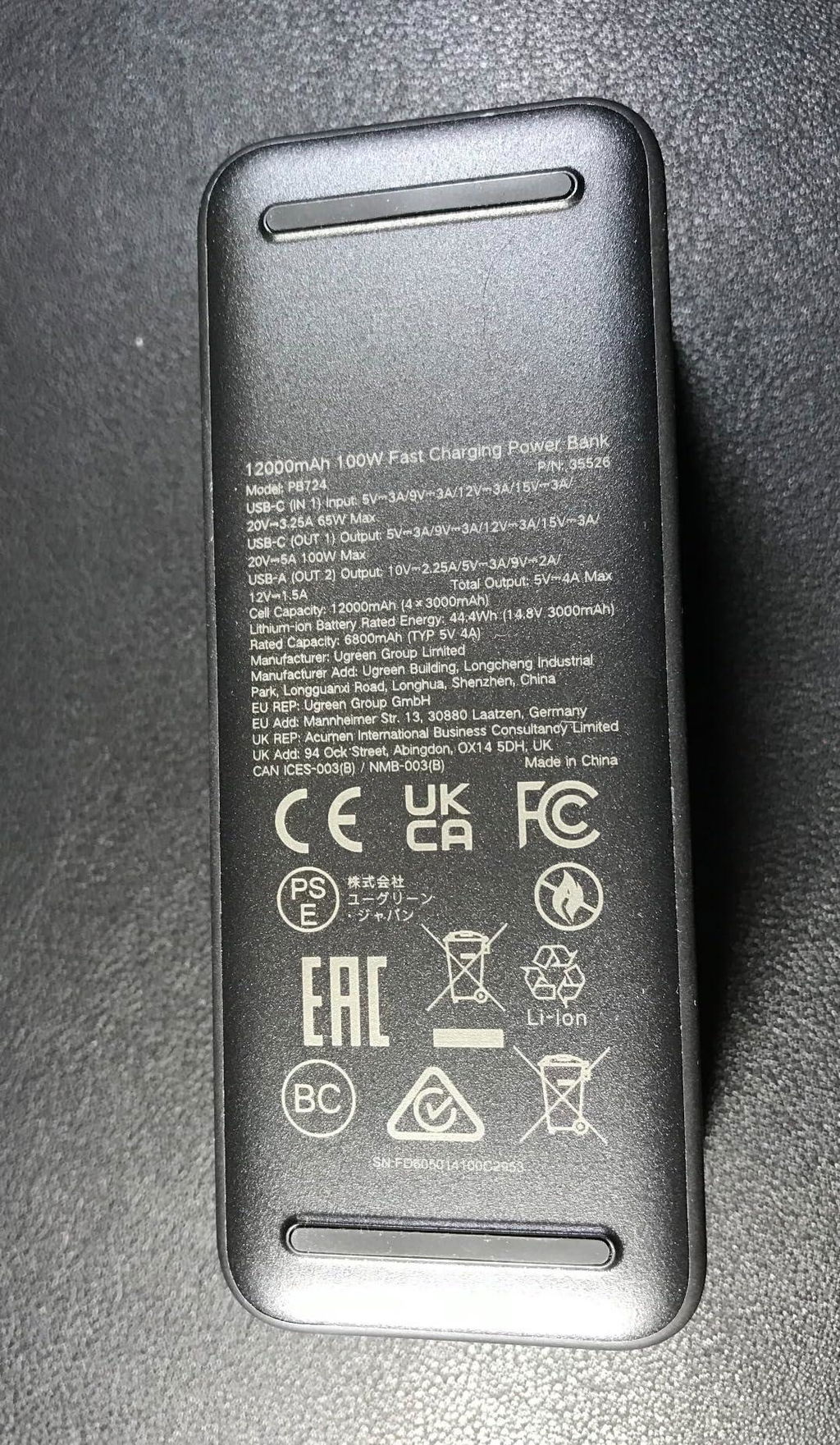
Also slightly misleading is the power bank's rated 12,000mAh overall capacity. 10,000mAh and 20,000mAh power banks are ubiquitous and cheap, but it appears this power bank's current is at 14.8V as opposed to others which run at around 5V. Inside it contains four Lithium-ion cells, each rated at 3,000mAh, run in parallel to give the total 12,000mAh.
Although not specified, the power bank was capable of quick charging our phones through both USB ports.
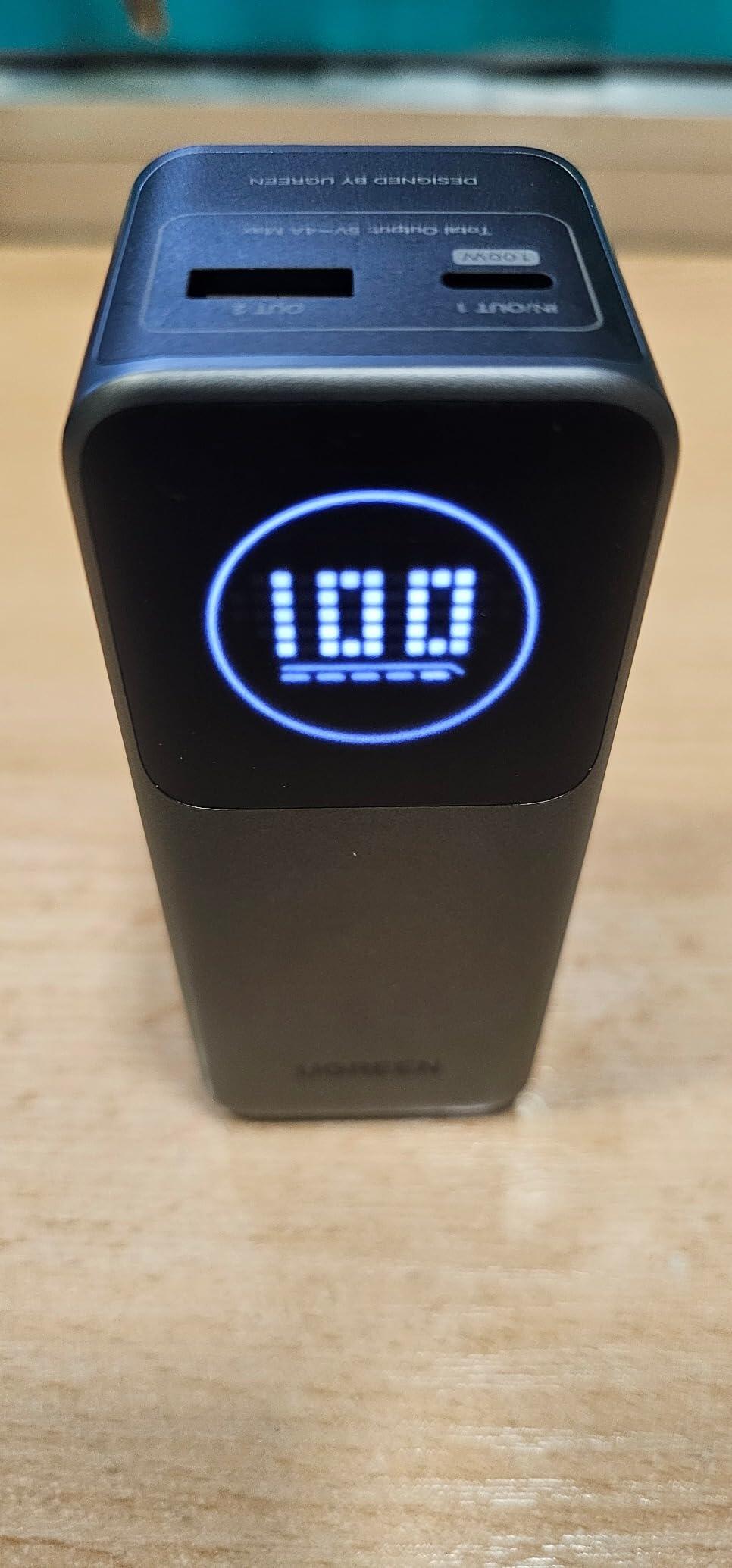
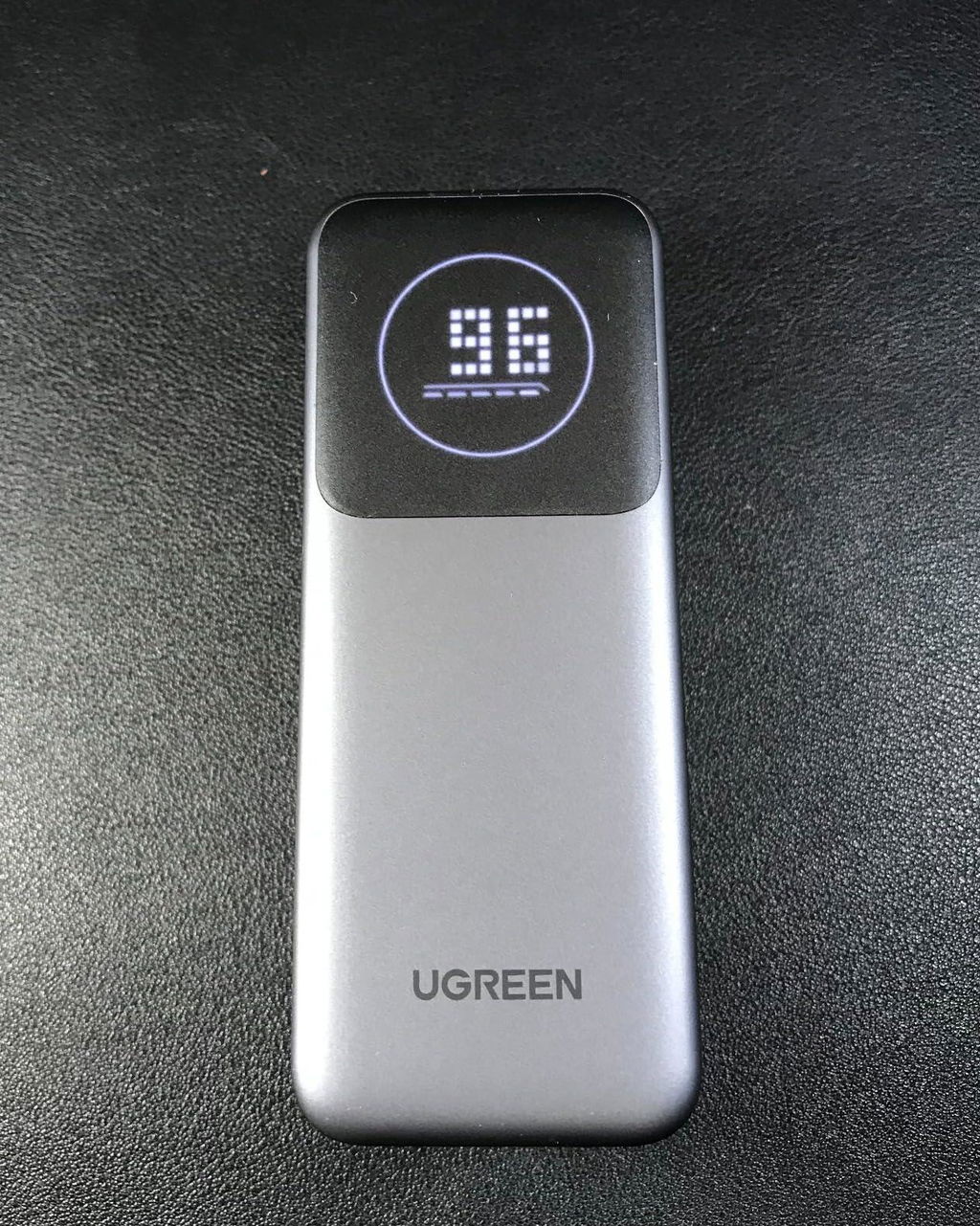
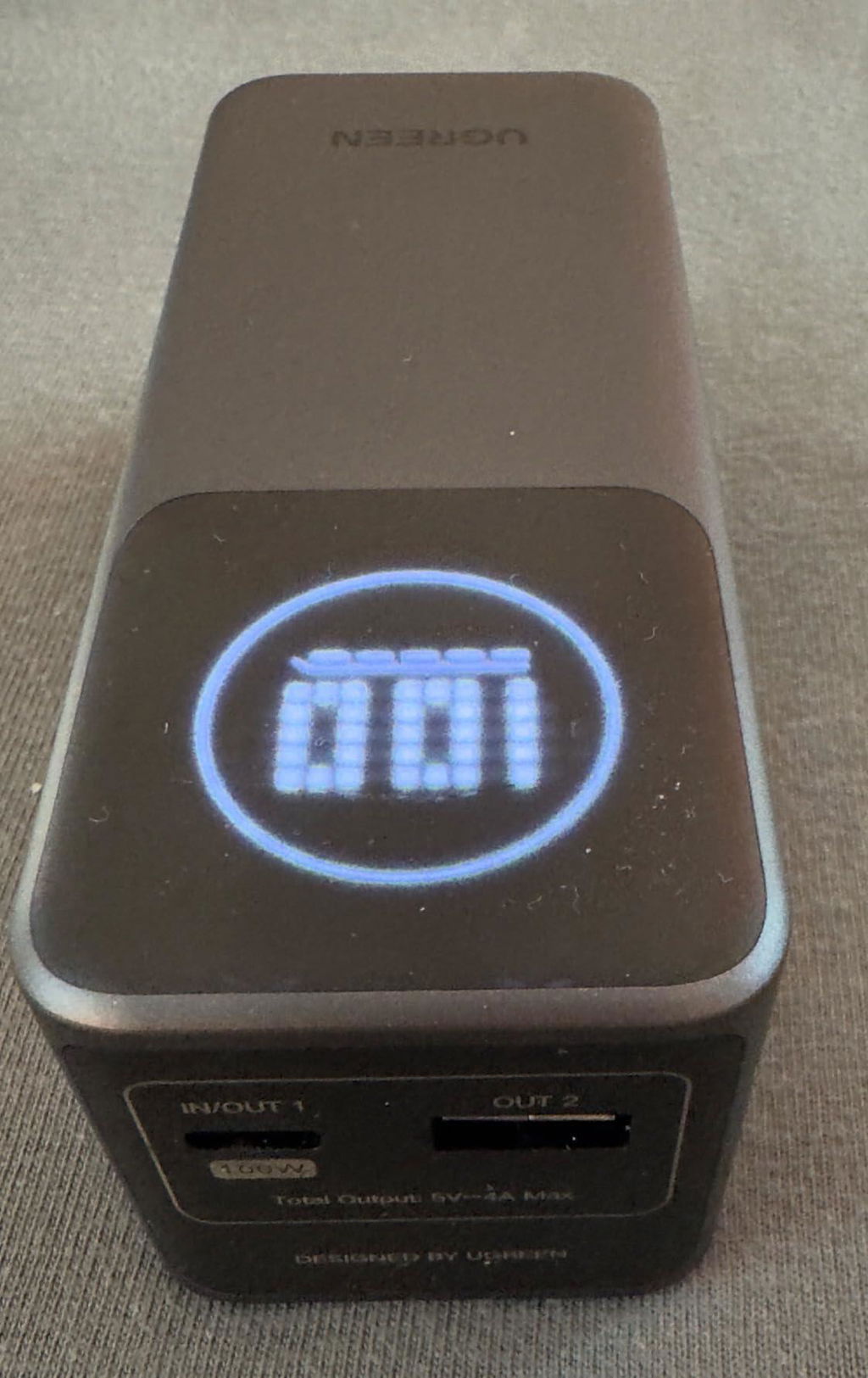
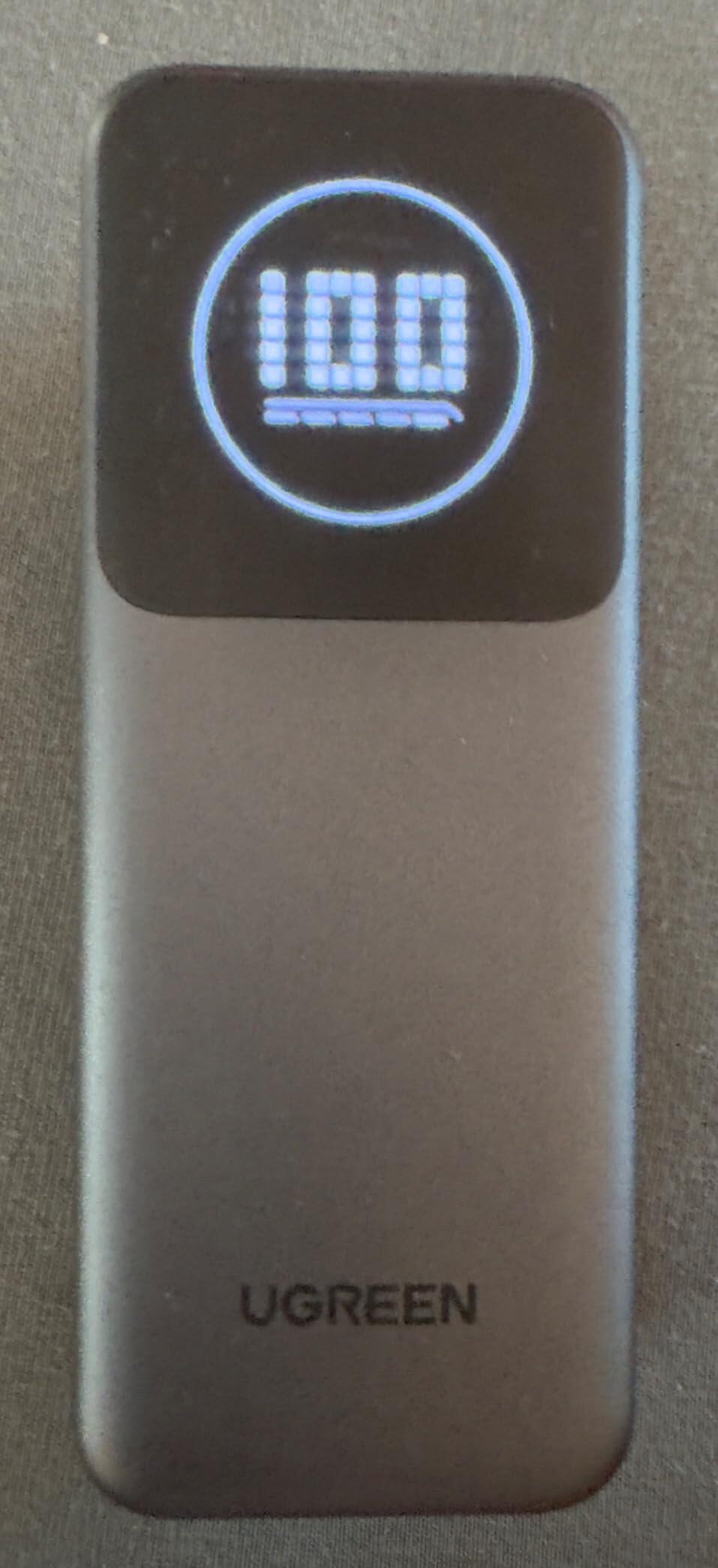
The amount of charge left in the power bank is shown in the display. It has a circle inside which there is a numerical display of the percentage and, rather pointlessly, a five-bar indicator of the same information.
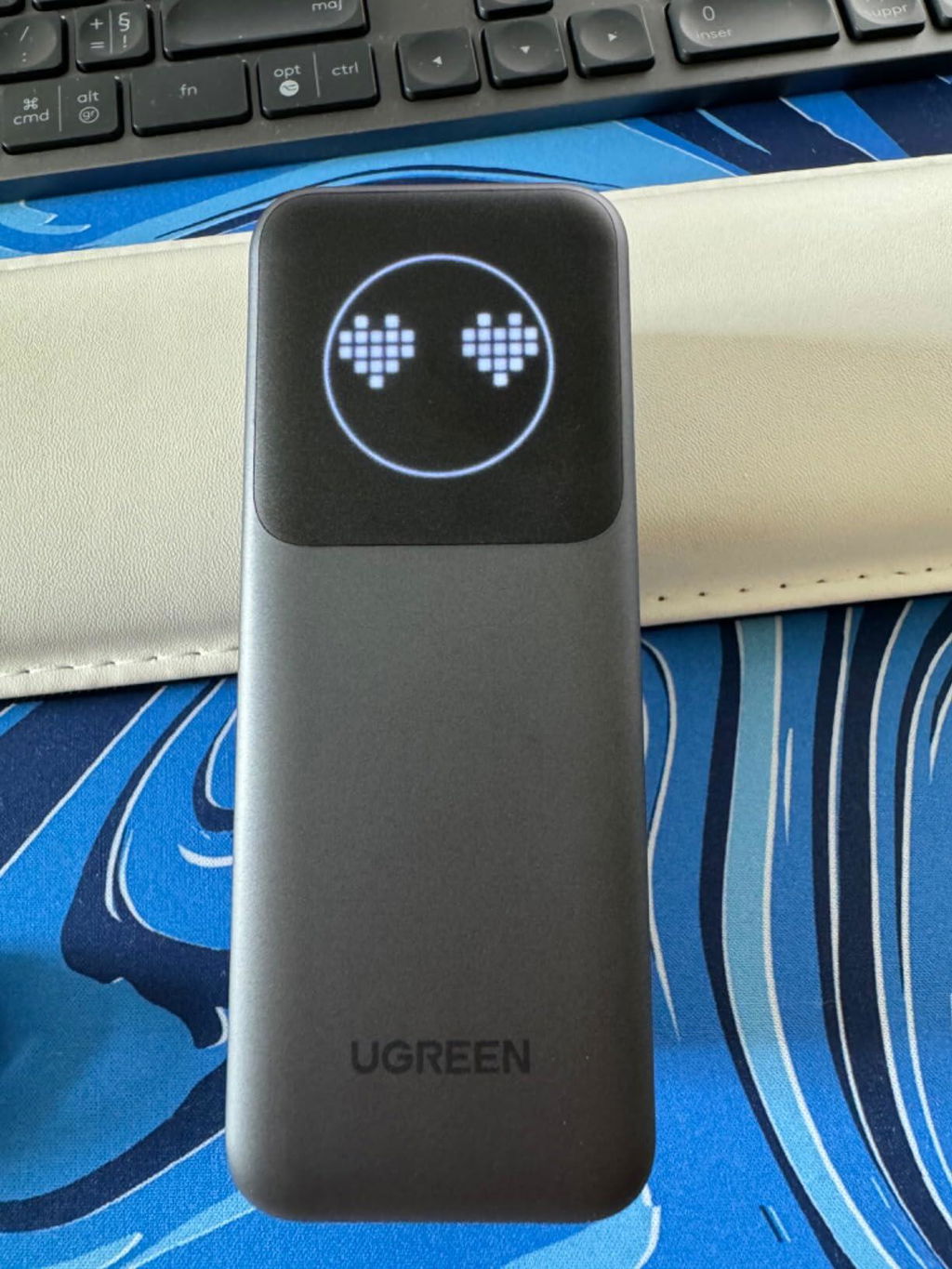
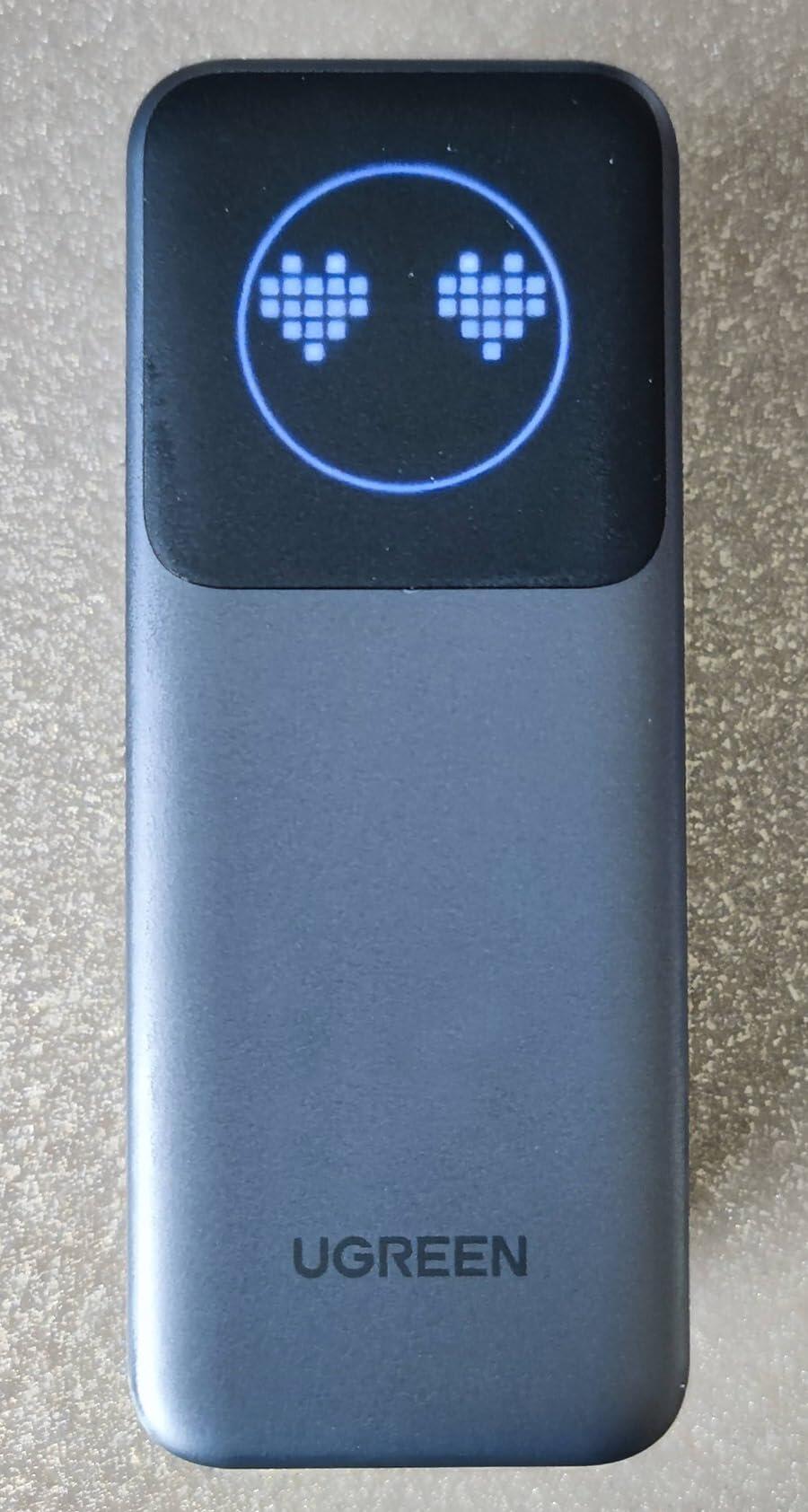
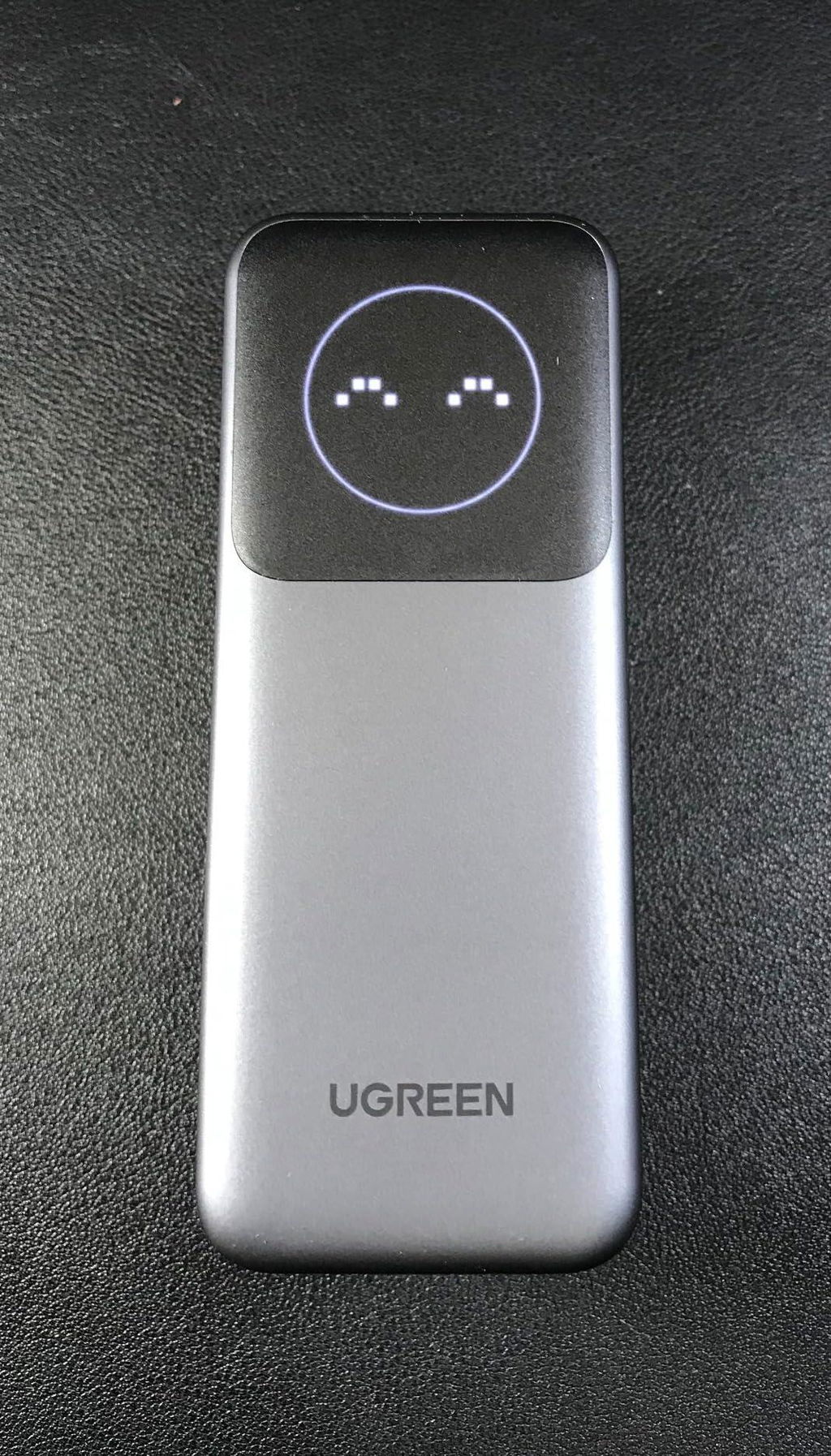
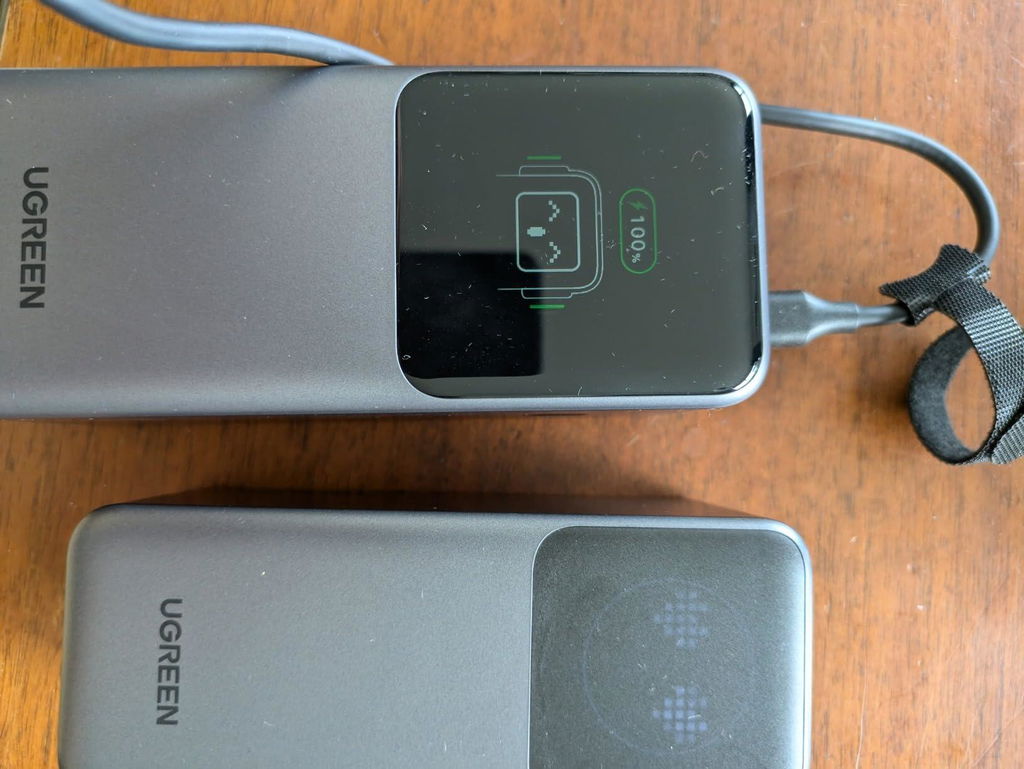
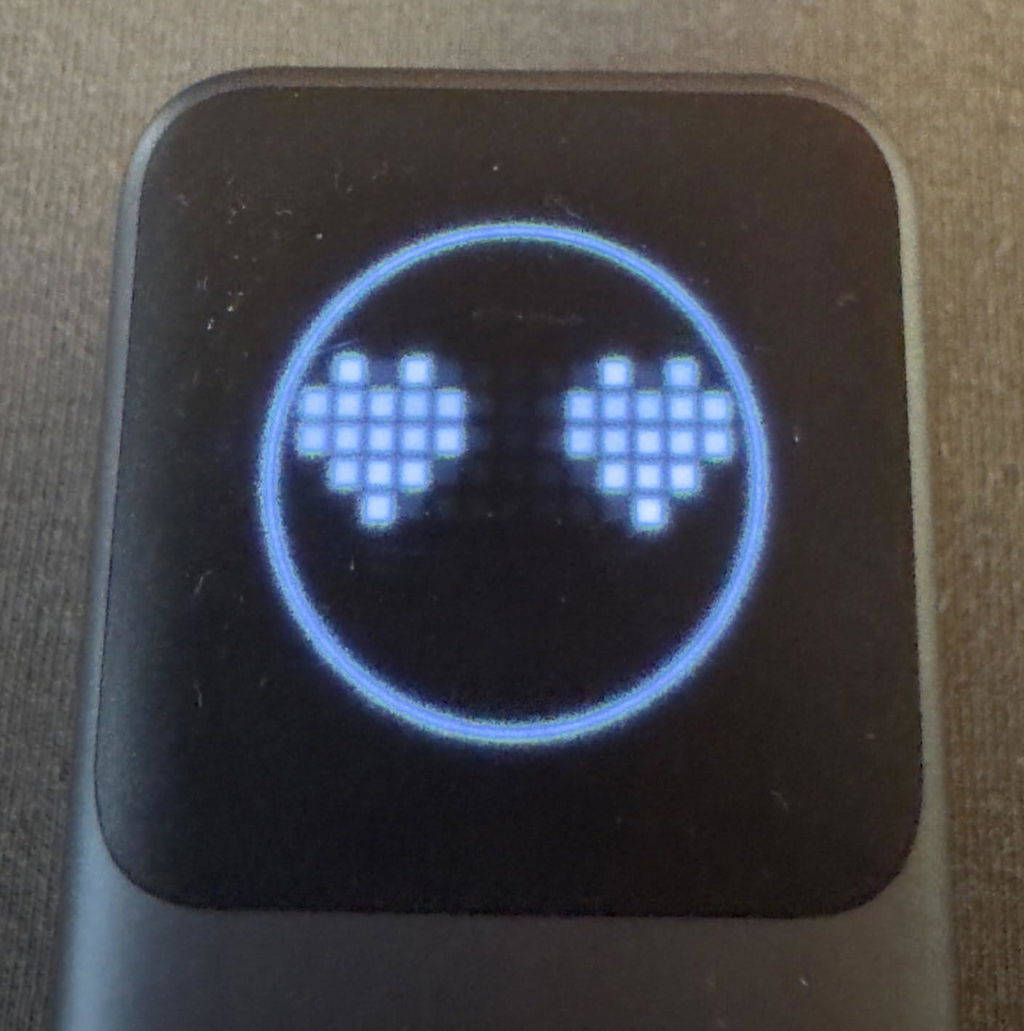
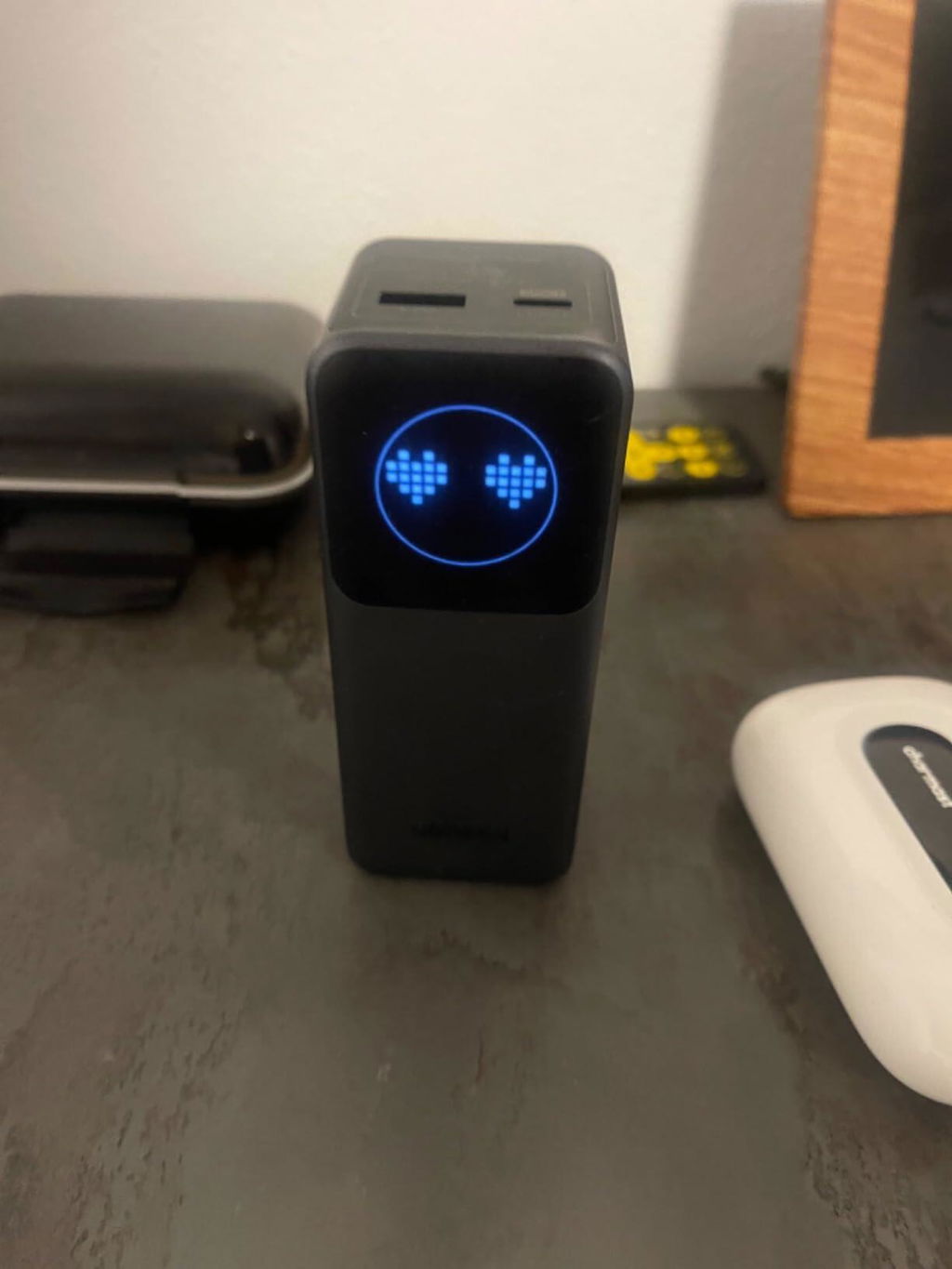
In an attempt to be 'cute', which is replicated across Ugreen's Nexode range, when left alone for twenty seconds the display changes to show a pair of eyes. The eyes show heart symbols when the power bank is 100% charged, another shape down to 20% charge, and then flat lines below 20%.
The power is normally supplied automatically when a device is plugged in, but if you are charging something which only draws a small current you can force the power bank into trickle-charge mode by pressing the side button for three seconds. Holding the button for six seconds switches it fully off.
Probably the key feature of this power bank is the ability to use the Power Delivery system to supply up to 100W to a connected device, such as a laptop. For the maximum 100W of power it can supply 20V at 5A.
We tested this feature using the supplied USB-C cable, and found the power bank was discharged from 100% to 1% in around 90 minutes. By the end it had charged our laptop's internal battery from flat to 91% capacity, effectively doubling the capability of our laptop's battery. The power bank only ever got slightly warm during this period of maximum output.
This 100W PD ability makes the Ugreen PB724 a very useful companion to your laptop, assuming it supports PD charging through the USB-C port. We'd prefer the non-PD 5V capability to be a little more powerful when charging two phones, especially given the device's high-power PD capabilities. Even so, this power bank is going to be our laptop companion when travelling.
A
As well as a couple of sets of bluetooth earphones and a set of headphones I also use heated jackets in the cooler months. This power bank looked like it may be able to not only recharge my earphones but also provide power to my jackets. One of my jackets did arrive with a battery rated at 10,000 mAh and that lasts about 4 to 5 hours when the heat output is set to medium. Therefor with this device, which is rated at 12,000 mAh I hope to get a similar time, if not a little more.
The power bank is sturdily built but I'm not sure if it is made from my preferred aluminium. It is a bit bulkier than my similar bank but not gigantic. It arrived with a USB C to C cable but it was only 50 cm long and so I opted to use one of my longer braided ones. On the back are rubber strips to prevent scratching of the unit.
On the top there is a USB C In/Out port and also a USB A Out. I did like the idea that this bank can be charged up in just about 1.5 hours and indeed the unit charged up pretty rapidly. Until it reached 95% and then it ground to a slow crawl but it did a sprint near the very end. I can't be sure how long the unit takes to charge from zero because it came with about 30% charge but it took about 80 minutes to get it up to 100%. UPDATE; I later completely drained the battery and it fully recharged in under 1.5 hours using a 140 Watt power adapter.
In usage the device quite readily charged up the case of my earphones and was able to keep my jacket going for quite some time, a little over 4.5 hours.. When I charged my earphone case I put the device into trickle mode, as suggested in the leaflet, in order to slowly drip the charge in which I believe is better for the appliance than forcing it in at top speed. I shall probably do this with my phone as well, just in case.
I do like a lot about this unit , however it is rather bulky and comes at a premium price. One major factor with batteries though is their durability, that capability to both take a charge quickly and also to release it quickly when needed. If this unit proves to be durable then it may be worth the premium price of £49.99.
G
The UGREEN Nexode Power Bank 12000mAh seems like a great charger:
Great Charging Speed: ★★★★★
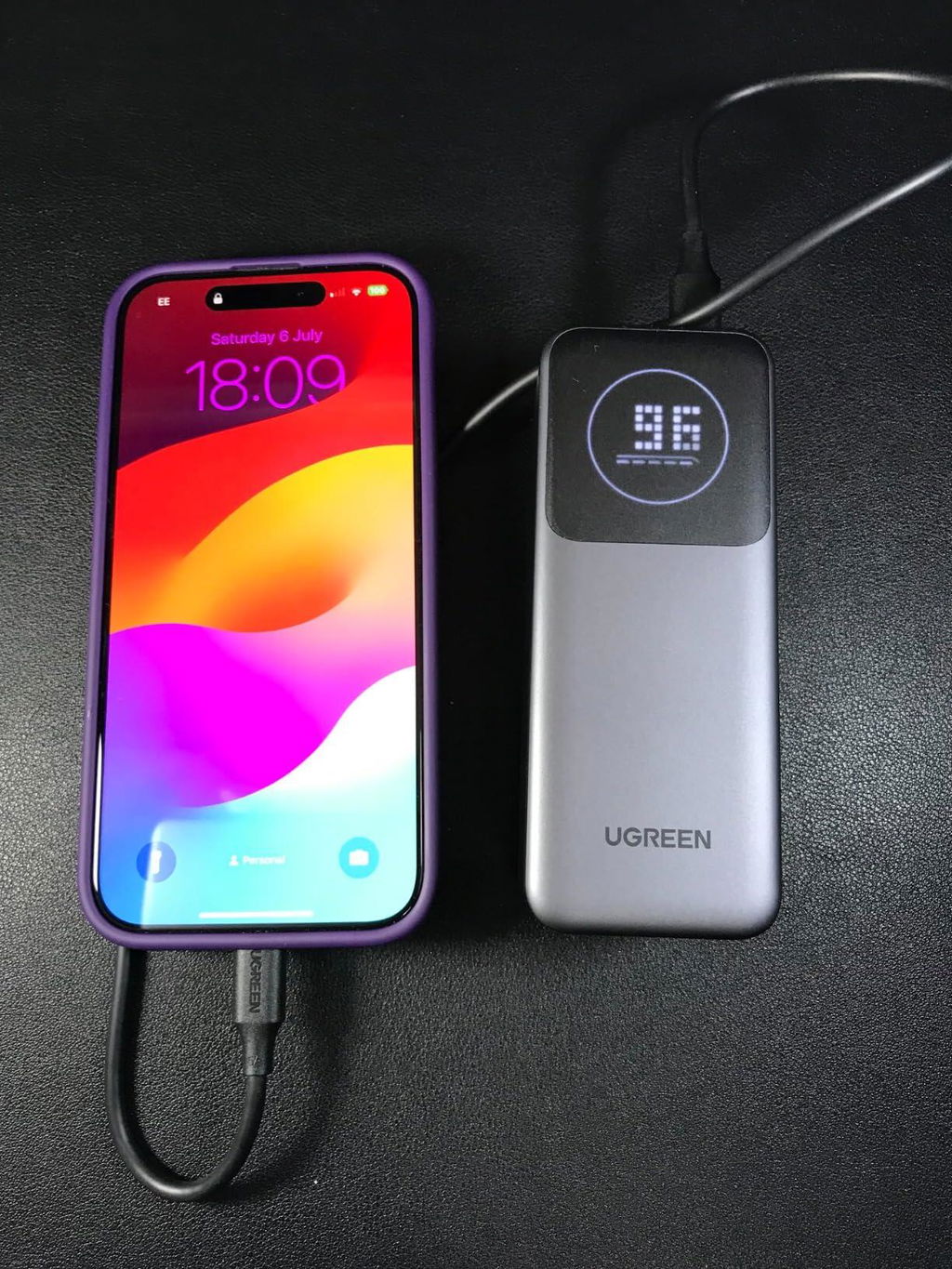
The 100W fast charging capability is really useful. It charges my iPhone 15 and laptop quickly, which is a huge plus.
Good Capacity: ★★★★★
With a 12000mAh capacity, this power bank means that I can recharge my phone multiple times before needing to recharge the power bank itself.
Smart Digital Display: ★★★★★
The digital display is a useful feature. It shows the remaining battery life clearly, so I know when I need to start thinking about recharging it. It also has a emoji style faces for various states of charge - a nice touch.
Compact and Portable: ★★★★★
The power bank is compact and easy to carry. It fits fine in my bag and doesn’t add too much weight, making it perfect for travel or remote working.
H
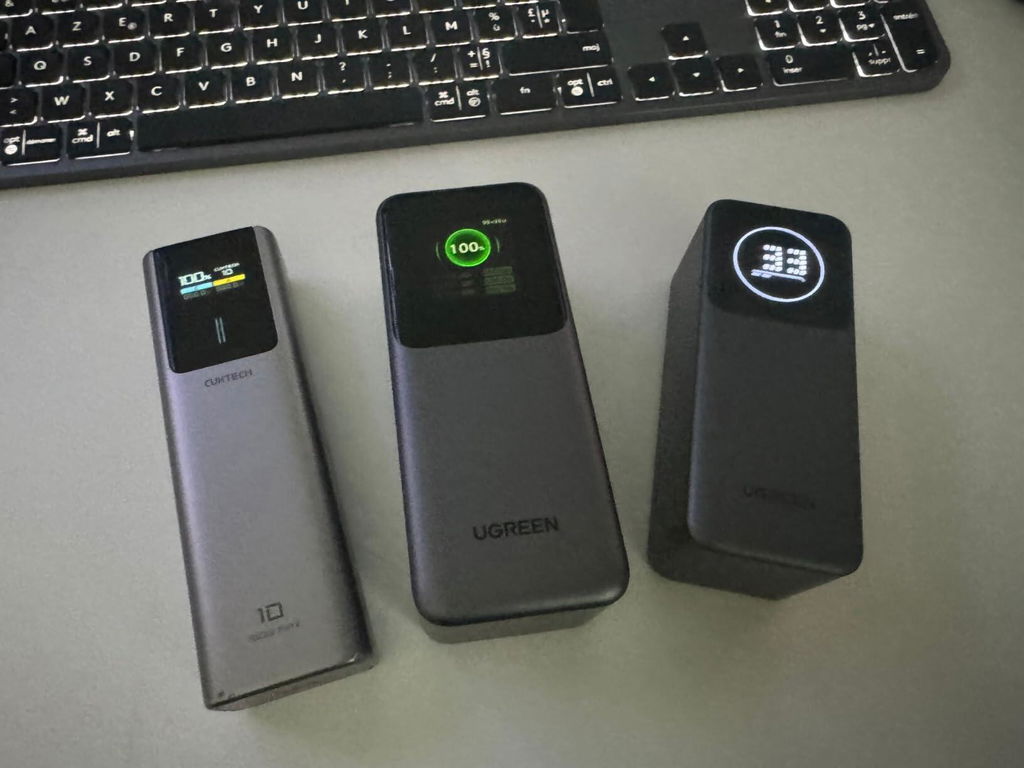
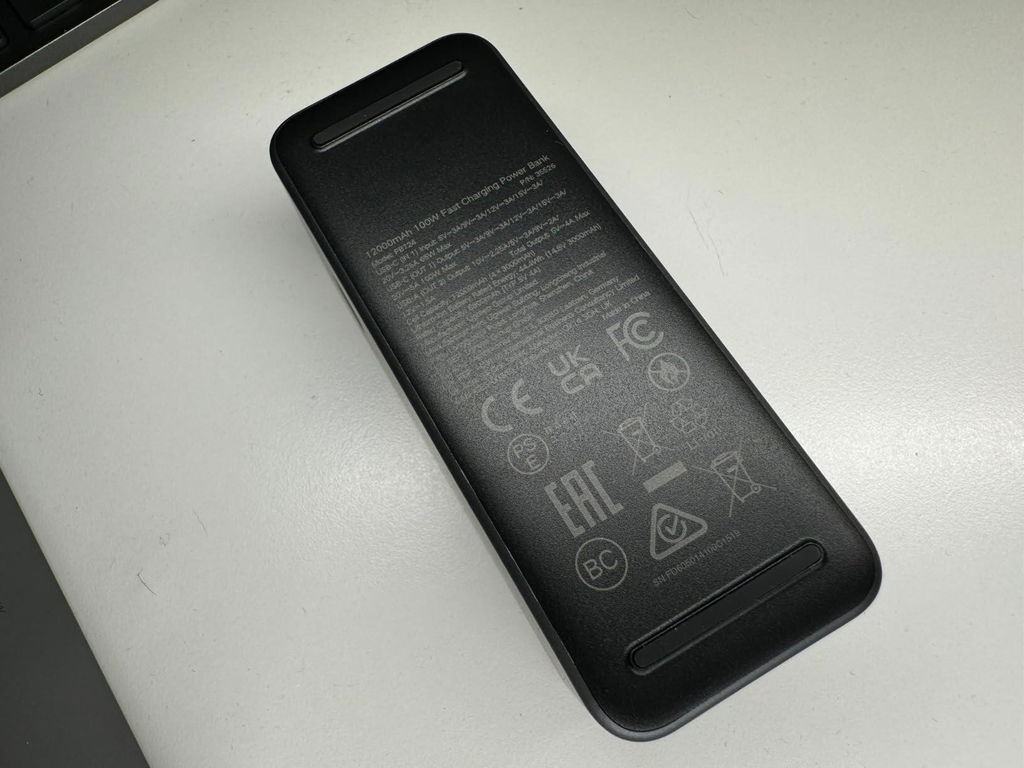
Le prix est en adéquation à la puissance de la batterie externe (44.4Wh). La puissance étant inférieur à 99Wh, vous pouvez l'emmener dans une cabine d'avion sans soucis. La batterie externe est capable de fournir une puissance totale de 100W. Le port USB-C peut fournir jusqu'à 100W et le port USB-A jusqu'à 22.5W selon le protocole de charge utilisée par votre appareil.
Si vous utilisez les deux ports en même temps, chaque port peut fournir seulement 10W, c'est l'un des points faible de cette batterie.
J'aurai aimé avoir un écran TFT comme sa grande soeur, l'écran de cette batterie peut uniquement afficher le niveau de la batterie. Vous ne pouvez pas surveiller la puissance des ports utilisés.
b
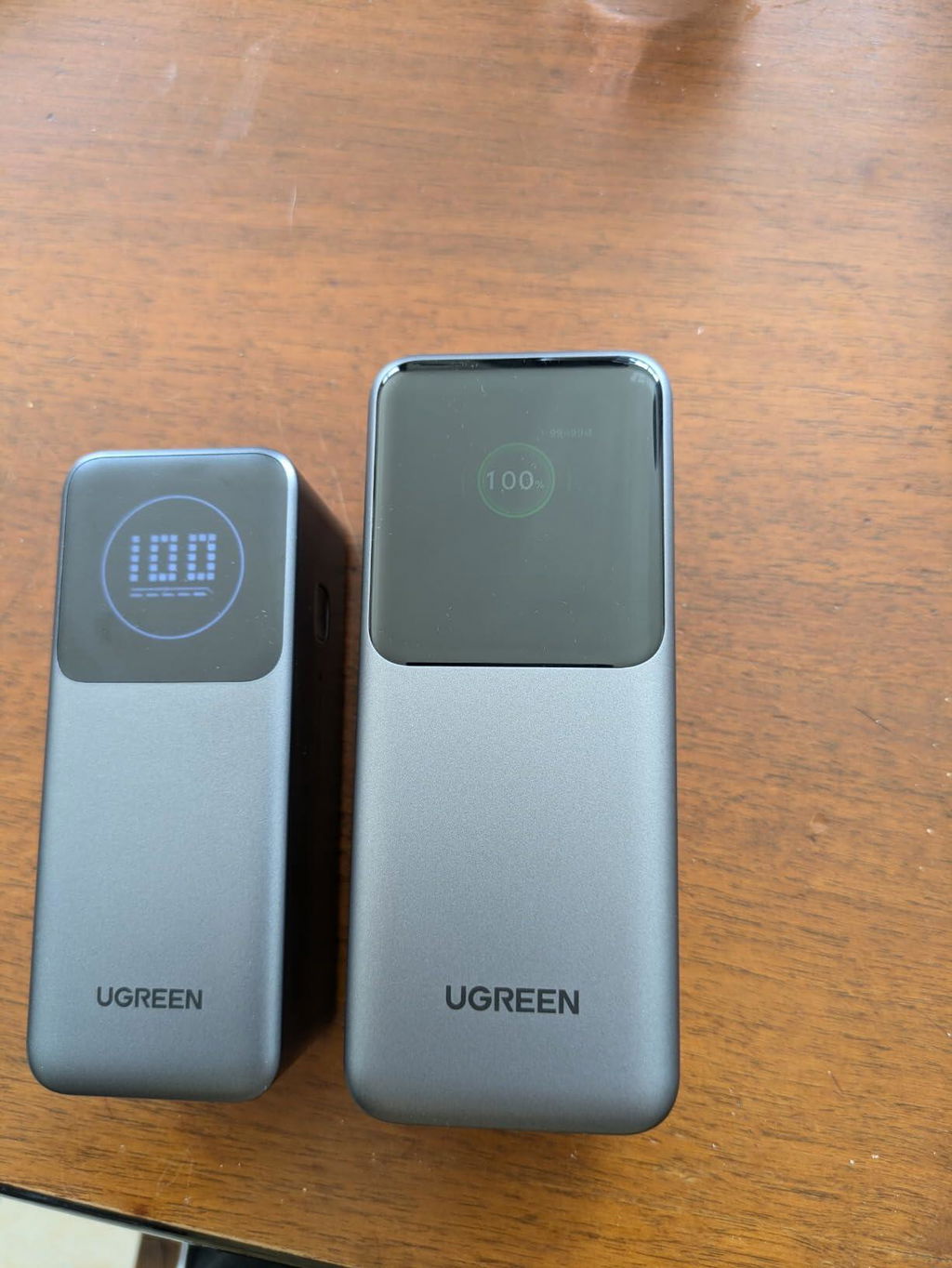
Ayant eu l'occasion de tester ce modèle et celui 20000mah, l'expérience acheteur est beaucoup moins premium avec celle-ci.
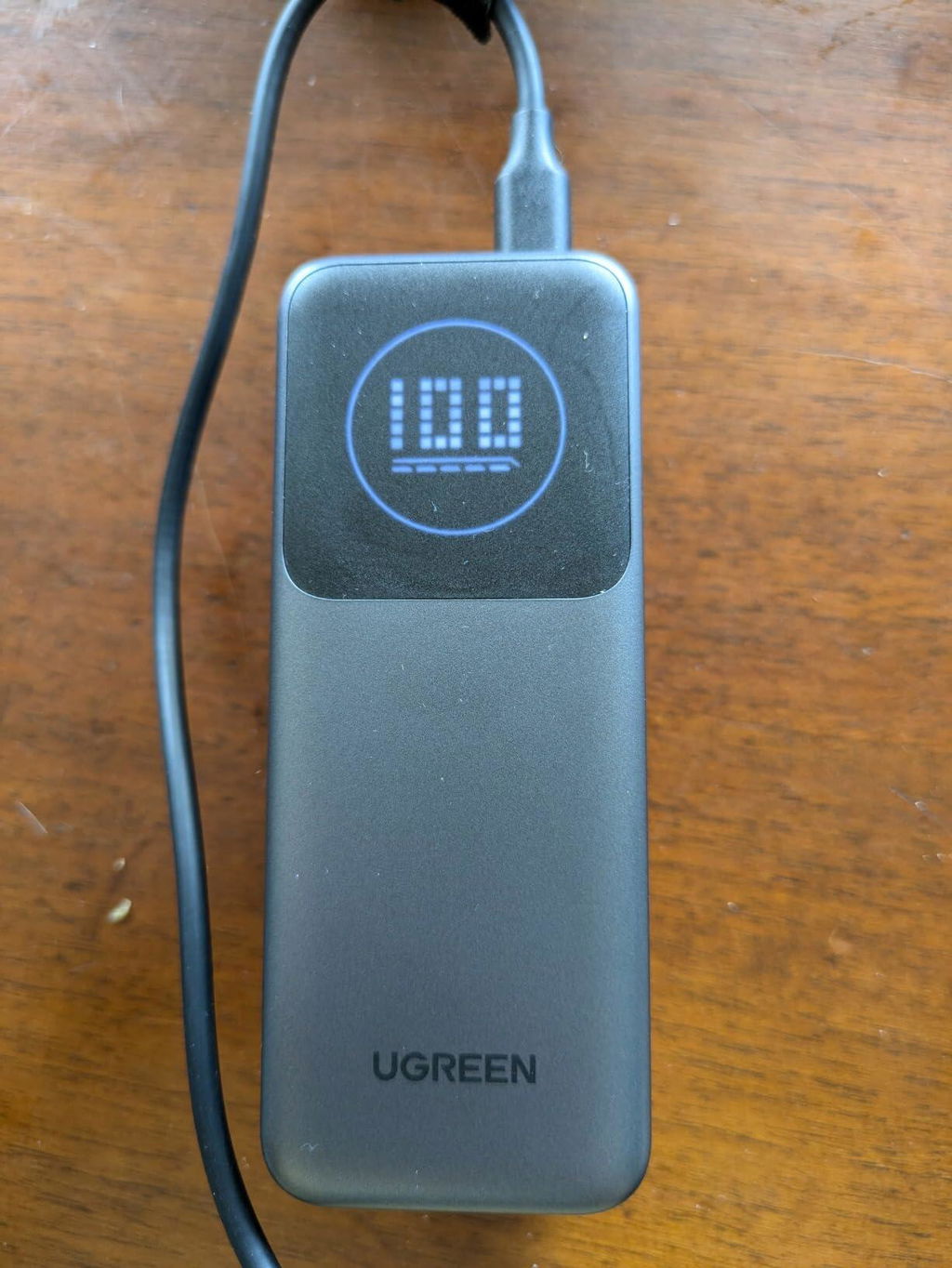
Le carton est plus simple, pas de poche de protection, écran monochrome n'indiquant que le niveau de charge.
La taille est plus compacte que l'autre.
La charge maximum est de 100w en usb-c qui est également le maximum si plusieurs appareils connectés( un usb-c et un USB-a)
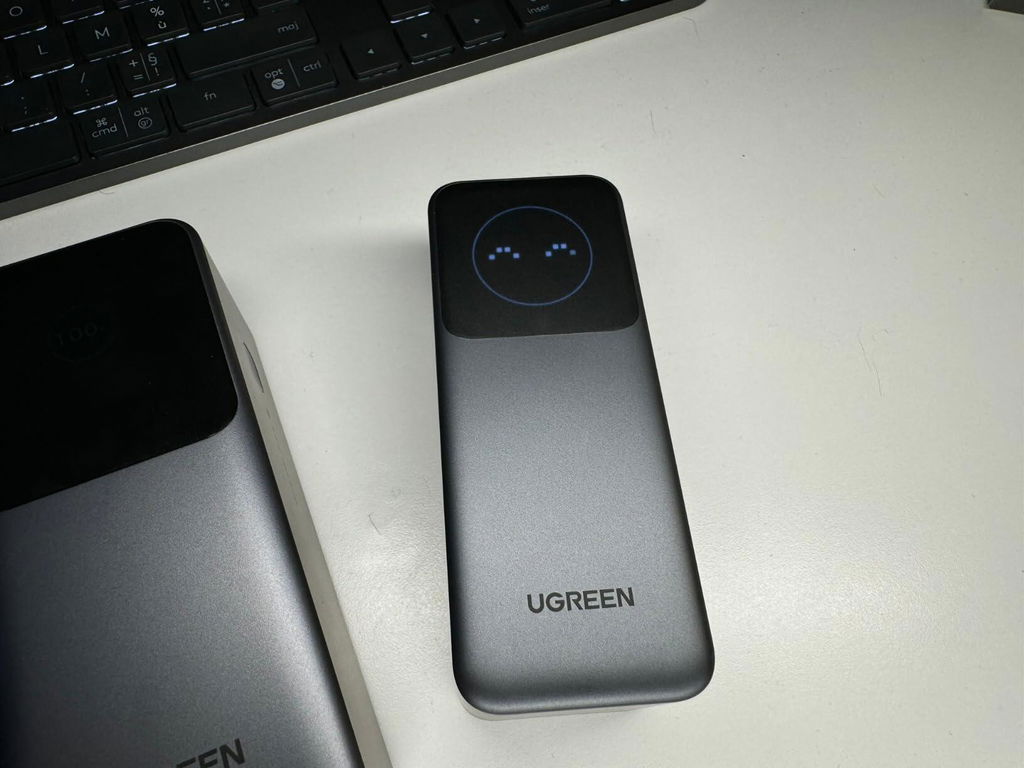
Quand la batterie n'est plus touchée depuis un moment, une tête de robot apparaît.
Je conseillerai personnellement de mettre un peu plus et de prendre le modèle 20000mah , même si ce modèle reste correcte.
A
Es ist ja durchaus nett, wenn ein Produkt versucht mal ein bisschen "anders" zu sein. So steht hier zum Beispiel neben dem einzigen Bedien-Knopf des Geräts: "More than power" - was neugierig macht. Ausser einem "Einschlaf"- und "Herzen"-Smiley konnte ich nichts entdecken, was dann ein solches Statement etwas ad absurdum führt und sich wie ein schlechter Marketing-Gag anfühlt.
Man hätte in Sachen User-Interface-Dialog schon gerne nochmals eine Schippe draufschlagen können, angezeigt wird nur das nötigste.
Aber ehrlich, was erwarte ich auch von einem Powerbank? Ich erhoffe mir möglichst grosse und schnell entsprechende- und aufladende Batterieleistung in einem möglichst kleinen und möglichst unempfindlichen Gehäuse.
12.000mAh sind ein bisschen mehr als die Standard 10.000mAh - das reicht fürs kleine Laden zwischendurch auf Reisen. Ausserdem geht das Laden ziemlich fix wie auch das Aufladen. Mir reicht das - und mehr habe ich nicht erwartet und gewünscht!
k
Power bank da 12000mAh!
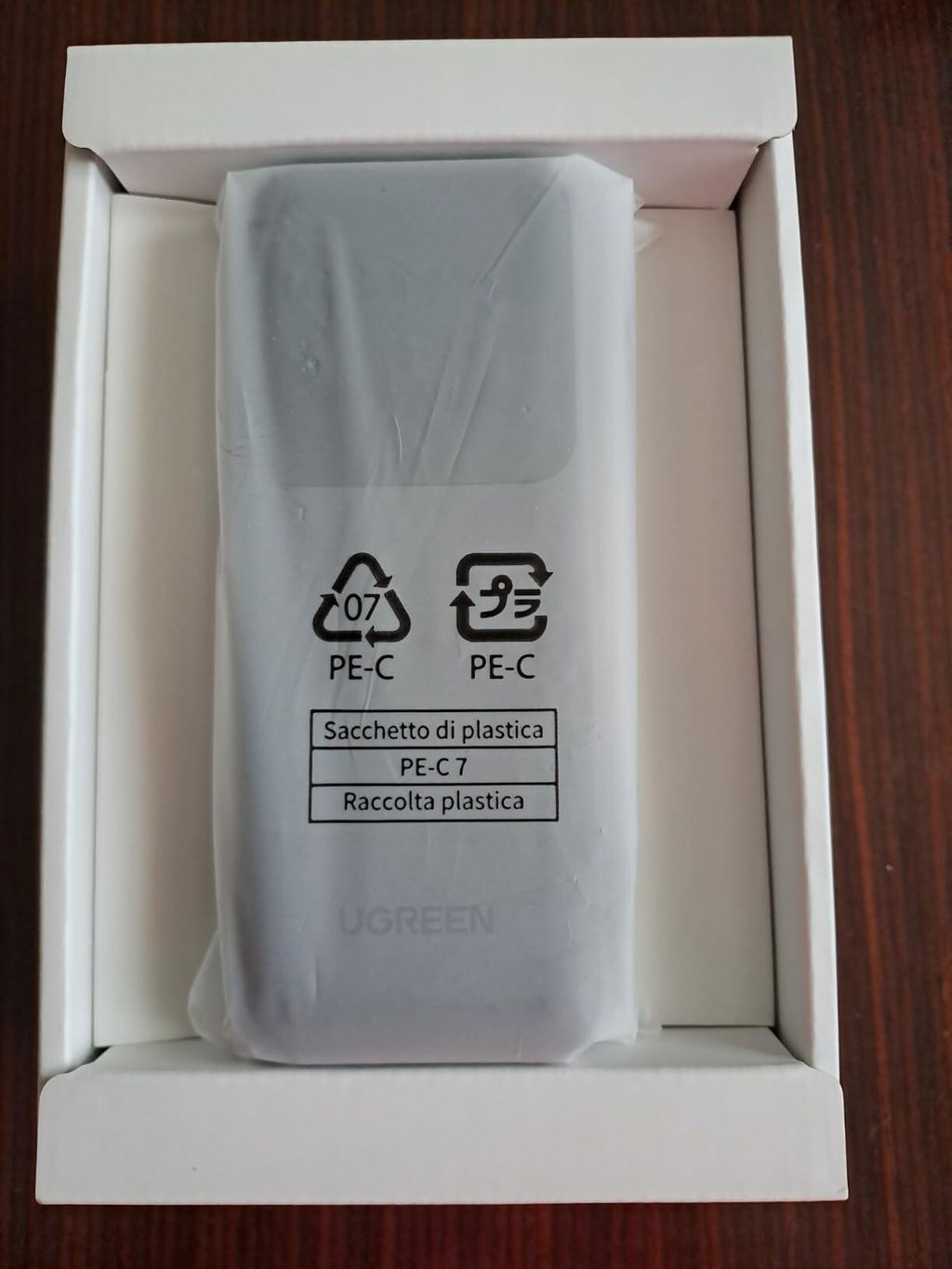
Nella confezione oltre al power bank troviamo fogli illustrativi tra cui l'italiano e cavo di ricarica entrambi i poli tipo C.
Per la ricarica di dispositivi si può usare il cavo usb tipo A e quello tipo C. Su uno dei lati il pulsante d'accensione/spegnimento. Nella parte sotto ci sono due gommini che fanno presa sulla superficie dove è appoggiato per evitare che si muova.
Ci mette davvero poco a ricaricarsi.
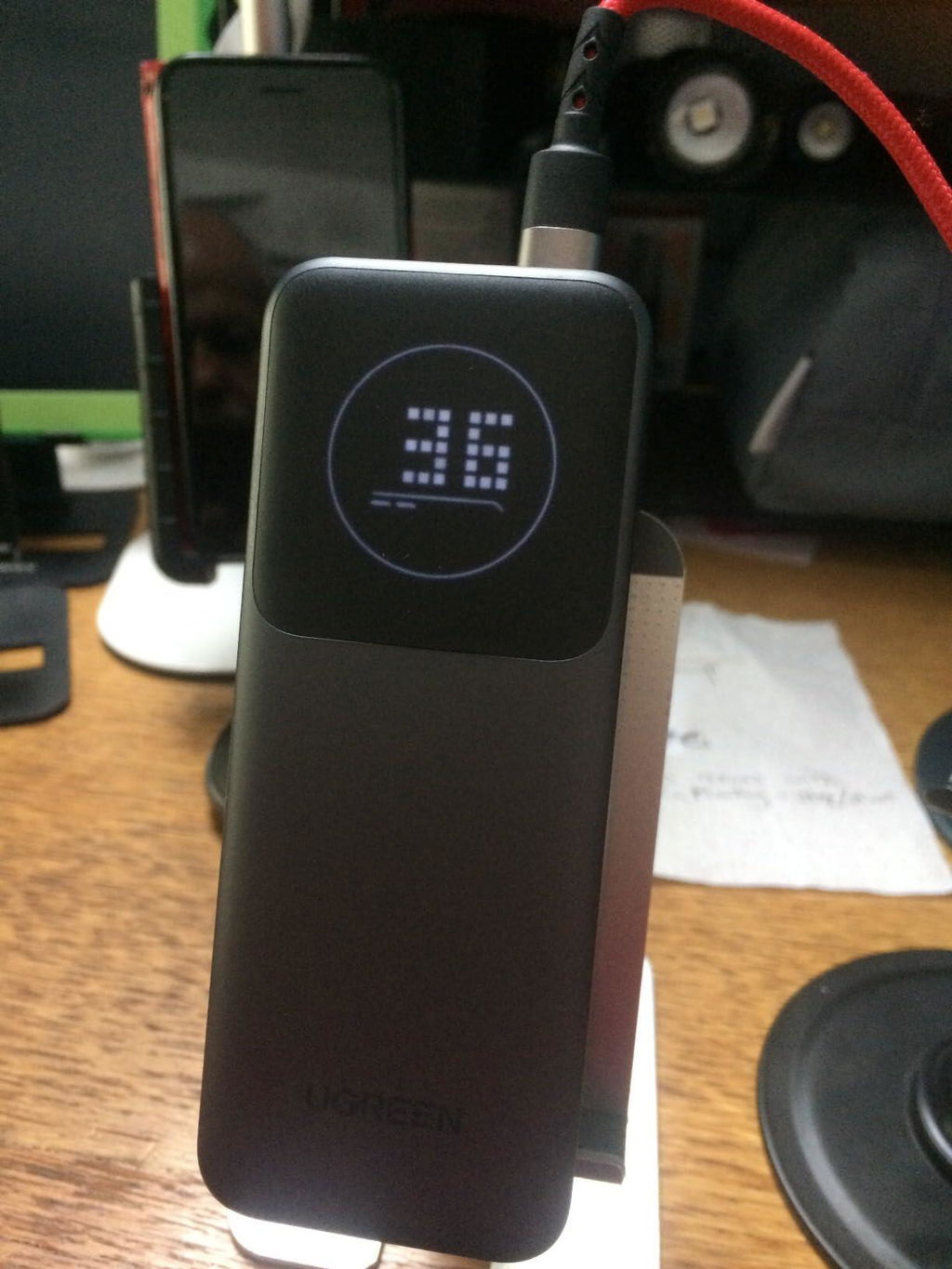
Sulle istruzioni e sulla descrizione da sito è indicato che può caricare due dispositivi contemporaneamente Vero,visto che ha due uscite ,però non li ricarica completamente. Ieri ho ricaricato il cellulare e a carica finita la percentuale del power bank era al 36%.
E' comunque un'ottimo prodotto,ben costruito e solido.Ovviamente pesa un pochino,però è normale!
Prodotto consigliato!!!
D
Una Power bank un po’ particolare consegnata all’interno della scatola originale del fornitore quest’ultima presenta una forma a quanto squadrata è rettangolare dagli angoli smussati e arrotondati
La Power bank pesa 310 g quindi non proprio una Power bank leggerissima ma quello che la rende da tavolo prevalentemente è la predisposizione della forma che la rende un po’ scomoda da trasportare in giro a meno che si trasporti in uno zaino
La Power bank verrà consegnata insieme al suo cavetto USB C a doppia testa che permetterà non solo di ricaricare il particolare stesso ma anche di conferire corrente ad un dispositivo
La Power bank in facciata presenta un piccolo display dove in maniera pixelata Permetterà di avere accesso a la ricarica della batteria rimanente e anche poter simulare due occhi a forma di cuore quando quest’ultima entrerà in stand-by, un’idea molto carina
La Power bank presenta esclusivamente due porte una USB di sola uscita con un vantaggio massimo di 15 e una USB C sia di M che di out che potrà sprigionare fino a 100 W di alimentazione il che la rende una Power bank dalle prestazioni assolutamente ottimali infatti potrà ricaricare il vostro iPhone 11 Pro Max in poco più di 21 minuti e pertanto poter evitare surriscaldamento della batteria del dispositivo e avere subito accesso a quest’ultimo in un brevissimo tempo.
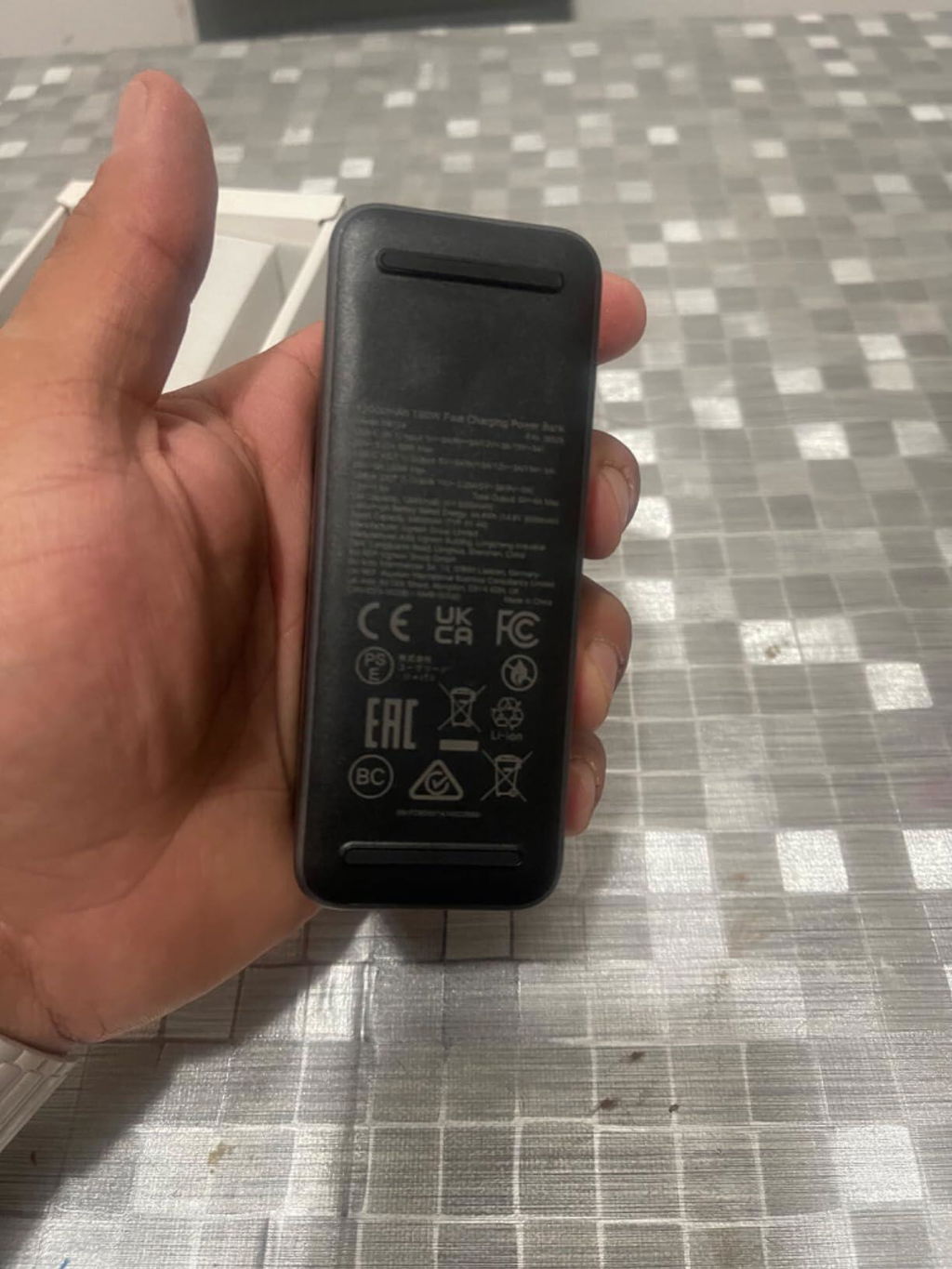
Nella parte posteriore vi saranno due piccoli piedini in gomma antiscivolo che pertanto impediranno la Power bank dedicarsi durante l’utilizzo mantenendo sempre la sua verniciatura opaca davvero molto accattivante
In sostanza un dispositivo compatto e molto robusto che non temerà caduta accidentali né botte particolari, dalle prestazioni elevatissime e che la rendono un dispositivo non troppo caro ma altamente performante l’unico punto negativo che non gli permette una recensione a cinque stelle è appunto la forma che la circoscrive ad un utilizzo un po’ più casalingo o comunque da Tavolo rendendola leggermente scomoda per il trasporto.
N
Alors c'est le mieux et le pire c'est batterie. Pourquoi?
+ finition excellente
+ écran lisible et rigolo (emotes)
+ puissance délivrée
MAIS des incohérences trop importante pour rendre l'usage utile :
- capacité bien trop petite
- connecteurs très limités, 2
En situation réelle : la recharge de mon iPad Pro M1 12,9 pouces, donc batterie de moins de 10 000 mAh n'est que de 68% avec cette powerbank full, de 100% à 0%.
Dès lors, j'ai du mal à saisir l'intérêt d'une recharge rapide de mon MacBook Pro de 0 à 20% puis powerbank HS.
La charge rapide c'est très bien, mais si derrière il n'y a pas un minimum de capacité pour tenir la longueur et charger suffisamment les appareils, ça ne sert à pas grand chose voir rien.
Au final c'est une powerbank tout juste suffisante pour recharger un smartphone et quelques accessoires mais pas du tout pour de plus grosse devices type grosses tablettes ou laptops. C'est décevant malgré l'excellente qualité de fabrication.